




How To Build a Dating App From Scratch: A Practical Guide for Founders
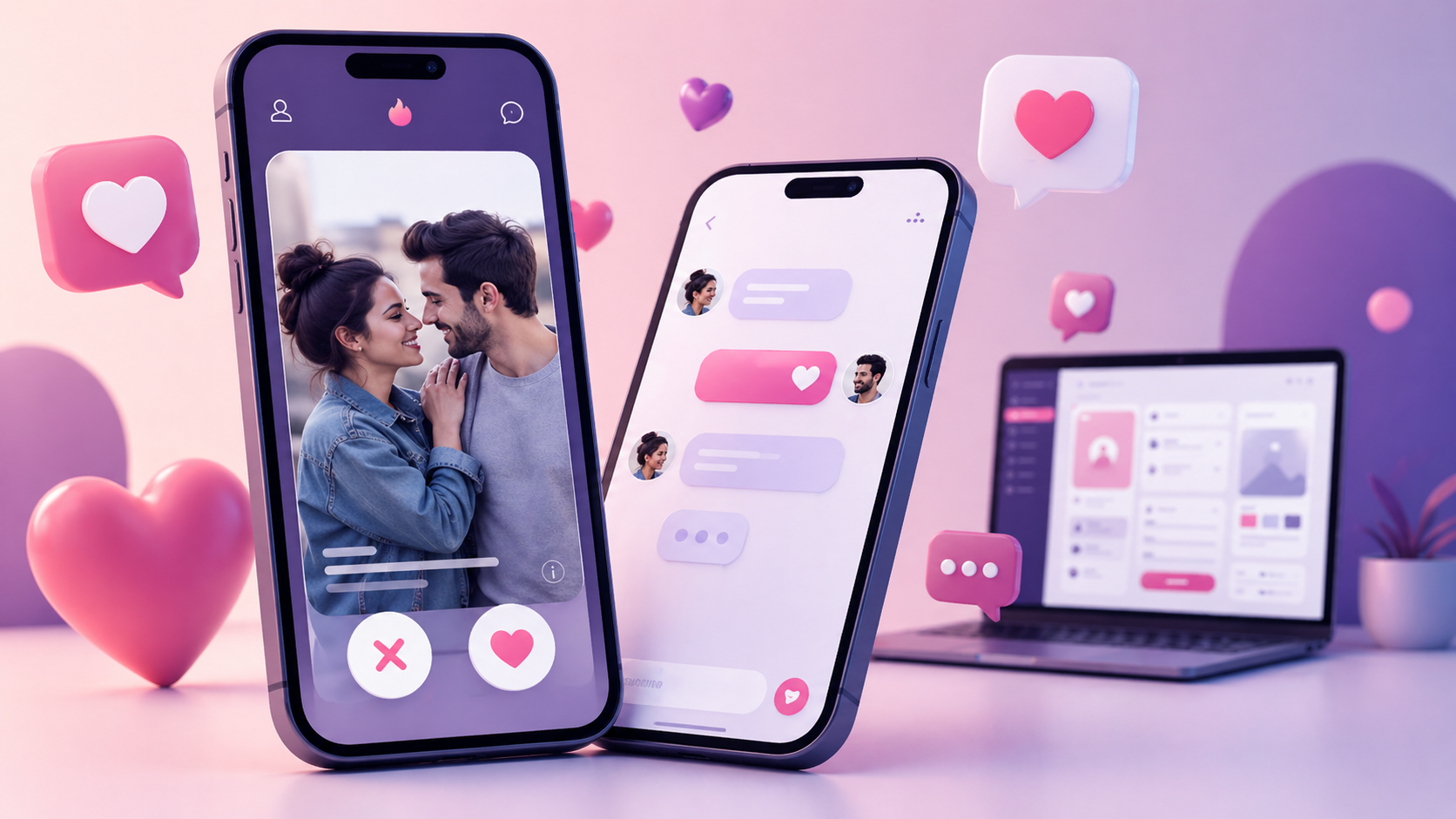
Building a dating app is not just about creating profiles, swipes, and chat. A successful dating product has to solve a specific social problem: helping the right people discover each other, feel safe, start conversations, and return often enough for the community to grow.
This guide is for startup founders, entrepreneurs without technical experience, product managers, and dating website owners who want to understand how to build a dating app from scratch without wasting budget on the wrong features.
You will learn how to plan the concept, define the MVP, choose the right features, estimate cost and timeline, avoid common mistakes, and decide whether custom development or a ready-made dating platform is the better starting point.
By the end, you should have a clear roadmap for turning a dating app idea into a launchable product.
On this page
- What building a dating app from scratch really means
- Why dating apps are different from regular apps
- How to choose your dating niche and user promise
- How to define your dating app MVP
- Core dating app features to plan first
- Profiles, matching, chat, and mobile UX
- Safety, moderation, and trust tools
- Monetization and retention
- Custom development vs ready-made dating platform
- How much it costs to build a dating app
- How long it takes to build a dating app
- Common mistakes to avoid
- FAQ
What does it mean to build a dating app from scratch?
To build a dating app from scratch means creating the product logic, design, user experience, backend, mobile interface, matching system, communication tools, moderation process, and monetization model around your specific dating concept.
It does not always mean writing every line of code manually from zero.
In practice, there are three common ways to build a dating app:
- Custom development, where a team builds the app around your exact requirements.
- Ready-made dating software, where you start from an existing platform and customize it.
- Hybrid development, where the core is ready-made, but key features, design, or business logic are customized.
The right option depends on your budget, timeline, technical experience, and how unique your dating concept really is.
If your idea is a standard dating app with profiles, search, matching, chat, payments, and moderation, a ready-made platform can help you launch faster. If your idea depends on unusual matching logic, complex AI, social networking mechanics, or a highly specific user journey, custom development may be more suitable.
Why building a dating app is different from building a regular app
A dating app is a marketplace of people.
That makes it harder than many simple mobile products. You are not only building software. You are creating a social environment where users judge the quality of the app by the quality, safety, activity, and responsiveness of other users.
A dating app must solve several problems at once:
- Users need enough relevant profiles.
- Profiles need to look real and attractive.
- Matching must feel useful, not random.
- Chat must make it easy to start conversations.
- Safety tools must reduce spam, scams, fake profiles, and harassment.
- Monetization must not destroy trust or block the core experience too early.
- Retention must be strong enough to bring users back.
This is why the first version of a dating app should not try to copy Tinder, Bumble, Hinge, Badoo, and every niche dating platform at once. The first version should prove one clear promise to one clear audience.
Step 1: Choose your dating niche and user promise
Before you choose features or technology, define who the app is for.
A dating app for serious relationships, religious dating, senior dating, LGBTQ+ communities, professionals, expats, local events, casual dating, or matchmaking services will need different onboarding, profiles, moderation, monetization, and user expectations.
A strong niche helps you answer practical product questions:
- What kind of users do you want to attract first?
- What problem do they have with existing dating apps?
- What makes them trust your app?
- What profile information matters to them?
- What kind of matching feels valuable?
- What behavior should be encouraged or restricted?
- What will users pay for?
A weak niche sounds like this:
“We want to build a dating app for everyone.”
A stronger niche sounds like this:
“We help single professionals in large cities meet people who are serious about long-term relationships, with verified profiles and conversation prompts that reduce low-effort matches.”
The second version gives you product direction. It tells you what to build, what to skip, how to write your landing page, and how to evaluate whether the app is working.
Practical niche validation questions
Before development starts, answer these questions:
- Who is the first user group you can realistically reach?
- Where will you find your first 500 to 1,000 users?
- Why would they choose your app instead of a larger competitor?
- What trust barrier stops them from joining?
- What is the first action you want them to take after registration?
- What is the first success moment inside the app?
For many dating startups, the first success moment is not payment. It is a completed profile, a first match, a first message, or a first reply.
Step 2: Define your dating app MVP
A dating app MVP is the smallest version of the product that can prove whether your concept works.
It should include enough functionality for users to register, create profiles, discover relevant people, communicate, stay safe, and give you measurable feedback.
A dating MVP usually includes:
- User registration and onboarding
- Profile creation and photo upload
- Basic search or matching feed
- Likes, interests, favorites, or swipes
- Messaging or chat
- Basic moderation tools
- Report and block functionality
- Admin panel
- Push notifications
- Basic monetization
- Analytics setup
The MVP should not include every advanced feature you can imagine.
Features like AI matchmaking, video dates, live streaming, virtual gifts, events, personality tests, complex gamification, and advanced recommendation algorithms may be useful later. But they can slow down the first launch if you add them too early.
MVP vs full-featured dating app
An MVP helps you test demand.
A full-featured dating app helps you scale an already validated product.
The goal of the MVP is to answer questions such as:
- Do users complete their profiles?
- Do they browse profiles?
- Do they send likes or messages?
- Do they return after the first session?
- Do they trust the app enough to upload photos?
- Do users pay for premium features?
- Are there safety or moderation issues?
The goal of the full product is different. It improves conversion, retention, monetization, safety, scalability, and brand differentiation.
Do not build the full product before you know the MVP has traction.
Step 3: Plan the core dating app features
The best way to build a dating app from scratch is to separate features into must-have, should-have, and nice-to-have groups.
This helps you protect the budget and avoid building expensive features before the product has users.
Must-have dating app features
These features are usually needed for the first serious version.
Registration and login
Users need a simple way to create an account. Common options include email, phone number, Google, Apple, or social login.
For dating apps, phone verification can reduce fake accounts, but it also adds friction. The right choice depends on your niche and safety requirements.
Onboarding
Onboarding collects the minimum information needed to create a useful profile and match users.
It should not feel like a long form. Ask only what is needed for the first version.
A good onboarding flow helps users complete their profile quickly and understand what to do next.
User profiles
Profiles are the product inventory of a dating app.
A weak profile system creates weak matches. A good MVP profile usually includes name or nickname, age, location, photos, short bio, gender, orientation or preferences, and key filters relevant to the niche.
The profile should make it easy for another person to decide whether to like, skip, message, or save the user.
Photo upload
Photos are critical in most dating products.
The system should support image upload, cropping, moderation, and profile photo rules. You may also need image compression, thumbnails, and limits for file size.
Photo quality has a direct effect on user trust and engagement.
Discovery or matching feed
Users need a way to find other users.
This can be a swipe feed, search results, recommended profiles, nearby users, or curated matches.
For an MVP, the discovery mechanic should be simple enough to understand and strong enough to create interaction.
Likes, matches, or interests
The app needs a lightweight interaction before chat.
This can be a like, wink, favorite, mutual match, or request to connect.
The best option depends on your product positioning. A casual app may use swipes. A serious relationship app may use likes, profile prompts, or controlled introductions.
Messaging or chat
Chat is one of the most important features.
For the MVP, one-to-one messaging is usually enough. Advanced chat features can come later.
The first version should focus on reliability, privacy, notifications, and abuse prevention.
Moderation tools
Admins need to review users, photos, reports, messages, and suspicious behavior.
Even basic moderation is better than launching without controls.
A dating app without moderation can quickly lose trust, especially if fake profiles or spam appear early.
Report and block
Users must be able to protect themselves.
Report and block tools are not optional in dating apps. They are part of the basic safety layer.
Admin panel
The admin panel helps manage users, content, payments, settings, complaints, and platform health.
For a founder without technical experience, a clear admin panel can be as important as the mobile interface.
Push notifications
Notifications bring users back when someone likes them, messages them, or matches with them.
They should be useful, not spammy. Too many notifications can reduce trust and increase uninstall rates.
Payments or monetization
If the app has a business model from the start, you need subscription, credits, paid boosts, paid messages, or another simple monetization path.
Payments should be tested carefully before launch because broken access rules or failed transactions can damage trust quickly.
Step 4: Separate must-have and nice-to-have features
A common mistake is treating every feature idea as necessary.
In dating app development, feature prioritization matters because every additional function affects design, development, testing, moderation, support, and future maintenance.
Must-have for the first version
Your first serious version usually needs:
- Registration and login
- Profile creation
- Photo upload
- Search or matching
- Likes or interests
- Messaging
- Report and block
- Admin panel
- Basic moderation
- Notifications
- Basic payments or monetization
- Analytics
This is enough to test whether users can join, discover people, interact, and return.
Nice-to-have for later versions
These features may be valuable, but they are not always needed for launch:
- Video calls
- Voice messages
- Live streaming
- AI profile recommendations
- AI dating coach
- Compatibility quizzes
- Events
- Group dating
- Gift marketplace
- Profile verification badges
- Advanced fraud scoring
- Complex gamification
- Multi-language support
- Referral program
- Affiliate program
The question is not whether these features are good. The question is whether they are needed before you have enough users to benefit from them.
If you are not sure, move the feature to the post-launch backlog and revisit it after you collect real user behavior.
Step 5: Design profiles, matching, and chat
Profiles, matching, and chat are the core product loop of a dating app.
The loop looks like this:
A user joins, creates a profile, discovers other users, sends a signal of interest, gets a response, starts a conversation, and returns to continue.
If this loop is weak, extra features will not fix the product.
Profile design
A dating profile should help users make a decision quickly.
For an MVP, do not overload the profile with dozens of fields. Focus on fields that support your niche and matching logic.
For example:
- A serious relationship app may need relationship goals, lifestyle, children, values, and long-term preferences.
- A senior dating app may need location, interests, communication preferences, and safety signals.
- A professional dating app may need education, career field, city, and availability.
- A casual social discovery app may need photos, short prompts, interests, and location.
The profile should answer three questions:
- Who is this person?
- Why might they be relevant to me?
- What can I say to start a conversation?
Matching logic
Matching does not have to be advanced in the first version.
Many successful MVPs start with simple filters and improve later. The first version can use:
- Location
- Age range
- Gender or orientation preferences
- Interests
- Relationship goals
- Profile completeness
- Activity level
- Mutual likes
More advanced matching can include compatibility scores, behavioral signals, AI recommendations, or manual matchmaking. But these require more data, more testing, and more development budget.
For the first launch, transparent and understandable matching is often better than a complex algorithm users cannot see or trust.
Chat and conversation design
Chat should be simple, fast, and reliable.
For a dating MVP, focus on:
- One-to-one text messaging
- Match-based or permission-based chat rules
- Read or delivery status if needed
- Spam prevention
- Reporting inside chat
- Notifications for new messages
- Admin visibility where legally and ethically appropriate
You can improve chat later with conversation prompts, icebreakers, voice messages, video calls, stickers, gifts, or paid messaging rules.
The key question is whether users can start a real conversation without confusion.
Step 6: Build safety, moderation, and trust tools
Safety is not a bonus feature in dating apps. It is part of the product.
Users are sharing personal photos, identity signals, location, preferences, and private messages. If the app feels unsafe, users leave quickly.
For an MVP, you do not need every enterprise-level safety tool. But you do need a basic trust layer.
Basic safety features for a dating app MVP
Start with:
- Email or phone verification
- Photo moderation
- Report user
- Block user
- Admin user review
- Suspicious account detection
- Clear community rules
- Privacy settings
- Secure password and authentication flow
Advanced safety features for later
Add these when the product grows:
- ID verification
- Selfie verification
- AI image moderation
- AI text moderation
- Fraud pattern detection
- Duplicate account detection
- Device fingerprinting
- Risk scoring
- Emergency date sharing
- Background checks where legally appropriate
- Human moderation workflows
The more sensitive your niche is, the earlier you should invest in safety.
For example, apps focused on serious relationships, women’s safety, high-income users, religious communities, or vulnerable groups may need stronger verification earlier than casual social discovery apps.
Step 7: Choose monetization before launch
Monetization should be planned early, even if you do not charge users on day one.
A dating app can grow quickly and still fail if the business model is unclear.
Common dating app monetization models include:
- Subscriptions
- Freemium access
- Paid messaging
- Credits or coins
- Profile boosts
- Super likes or priority likes
- Paid visibility
- Gifts
- Premium filters
- Ads
- Events
- Manual matchmaking services
A good monetization model should match user intent.
For example, a serious relationship app may work well with subscriptions and verification-based premium access. A casual discovery app may work better with boosts, coins, or premium visibility. A matchmaking-style product may combine software access with paid human services.
What to monetize in the MVP
For the first version, choose one or two monetization mechanics.
Good MVP options include:
- Monthly subscription for premium access
- Paid boost to increase profile visibility
- Paid access to see who liked you
- Paid messaging limits
- Premium filters
- Credits for selected actions
Avoid monetizing every action too early. If users feel blocked before they understand the value of the app, conversion may fall.
The better approach is to let users experience the core value first, then offer paid upgrades that improve results.
Step 8: Plan retention from the beginning
A dating app does not survive on registrations alone.
Users need reasons to return. If they register once, browse a few profiles, and never come back, the app will not grow even with paid traffic.
Retention depends on the quality of the core loop:
- Relevant profiles
- Clear matching logic
- Fast responses
- Useful notifications
- Profile activity
- Trust and safety
- Fresh recommendations
- Visible progress
For an MVP, retention does not require complex gamification. It requires a product that gives users a reason to check again.
Practical retention features
Useful early retention features include:
- New match notifications
- New message notifications
- Profile visitors or likes
- Daily recommendations
- Profile completion prompts
- Smart reminders to reply
- Visibility boosts
- Simple onboarding tips
- Email reactivation campaigns
Retention should support real user value. Do not use reminders just to create noise.
A good notification says, “Something relevant happened.”
A bad notification says, “Please open the app because we need activity.”
Step 9: Decide between dating website, native app, cross-platform app, and PWA
When people search how to build a dating app from scratch, they often imagine iOS and Android apps immediately.
That is not always the best first step. If you want to create a dating app for iOS and Android, explore the professional mobile development options available.
You can launch a dating product in several formats:
- Dating website
- Native iOS app
- Native Android app
- Cross-platform mobile app
- Progressive web app
- Website plus mobile apps
Dating website
A dating website is often easier to launch, test, index, and manage.
It can be a strong option if SEO, content marketing, desktop users, admin control, or fast validation matter.
A website can also support mobile users through responsive design.
Native mobile app
Native apps are built separately for iOS and Android.
They usually offer strong performance and the best access to device features, but they cost more because you maintain separate codebases.
Native development can make sense if your app depends heavily on mobile UX, push notifications, geolocation, camera, video, or app store presence.
Cross-platform app
Cross-platform apps use frameworks like Flutter or React Native to build iOS and Android apps from one shared codebase.
This can reduce time and budget compared with building two native apps separately, although very complex features may still need native work.
PWA
A progressive web app can feel app-like in a browser and may work well for early validation.
However, it may not fully replace native apps if you need deep mobile features, app store distribution, or stronger push notification behavior across all devices.
Practical recommendation
If your budget is limited, start with the smallest launch format that can prove the concept.
For many founders, that means:
- Start with a responsive dating website or ready-made platform.
- Add mobile apps after you validate the niche and core user behavior.
- Use cross-platform development if you need iOS and Android faster.
- Use native development when performance, device features, or long-term app quality justify the extra cost.
Step 10: Choose the technology and architecture
A dating app needs more than a visible mobile interface.
It also needs backend systems, database structure, media storage, real-time communication, moderation tools, analytics, payment integrations, and admin workflows.
A typical dating app architecture includes:
- Frontend mobile app or web interface
- Backend application
- User database
- Media storage for photos and videos
- Matching or recommendation logic
- Real-time chat service
- Notification system
- Payment gateway
- Admin panel
- Moderation system
- Analytics tools
- Security and access control
Tech considerations for dating apps
Pay special attention to these areas.
Scalability
The app should handle more users, messages, photos, and notifications as the community grows.
You do not need enterprise-level infrastructure on day one, but the system should not collapse when marketing starts working.
Real-time communication
Chat should be reliable.
If messages are delayed or lost, users lose trust. Dating apps are especially sensitive to communication issues because users expect fast interaction.
Media handling
Dating apps depend on photos.
You need upload limits, compression, cropping, thumbnails, moderation, and storage planning.
If video is part of the product, the technical requirements become more complex.
Privacy
Users should control what others can see.
This includes profile visibility, location visibility, online status, and blocked users.
Payments
Subscriptions, credits, and one-time purchases require reliable payment integration and clear access rules.
Payment logic should be tested carefully before launch.
Moderation
The admin team must be able to review profiles, reports, photos, complaints, and suspicious behavior.
Moderation should be part of the admin workflow, not a manual emergency process.
Analytics
You need to measure onboarding, activation, matching, messaging, retention, and revenue.
Without analytics, you are guessing.
Step 11: Build analytics before marketing
Many founders want to launch ads immediately after the app goes live.
That can waste money if analytics are not ready.
Before spending heavily on traffic, track the key funnel:
- Landing page visits
- Registration starts
- Completed registrations
- Completed profiles
- Photo uploads
- First profile views
- Likes or interests sent
- Matches created
- First messages sent
- First replies received
- Returning users
- Paid conversions
- Refunds or cancellations
- Reports and blocks
A dating app should not only measure downloads or registrations. A registration is not enough.
The real health of a dating app comes from activation and interaction.
Good early metrics include:
- Profile completion rate
- Percentage of users who upload photos
- Percentage of users who view profiles
- Percentage of users who send a like
- Percentage of users who receive a match
- Percentage of users who send a first message
- Reply rate
- Day 1, Day 7, and Day 30 retention
- Conversion to paid plan
If users register but do not complete profiles, the onboarding may be too long or unclear.
If users browse but do not like anyone, the profile quality or matching may be weak.
If users match but do not message, you may need better prompts, incentives, or chat design.
If users message but do not return, notification or conversation quality may be the issue.
Step 12: Launch with a focused go-to-market plan
A dating app needs users on both sides of the marketplace.
Launching without a user acquisition plan is one of the fastest ways to fail.
Before launch, decide how you will bring the first users.
Possible acquisition channels include:
- SEO content
- Paid search
- Social media
- Influencer partnerships
- Local communities
- Niche forums
- Referral campaigns
- PR
- Events
- Email lists
- Partnerships with offline communities
For a dating startup, quality is often more important than raw user volume.
A small group of highly relevant users in one city, community, or niche is usually better than thousands of random signups from unrelated countries.
Early launch strategy
A practical launch plan can look like this:
- Pick one niche and one launch market.
- Create a landing page before the app is ready.
- Collect early signups.
- Interview potential users.
- Launch a beta group.
- Monitor onboarding and messaging behavior.
- Improve profiles and matching.
- Add monetization only when users see value.
- Expand to the next city, segment, or channel.
Do not try to launch everywhere at once unless you already have a strong traffic source.
Custom development vs ready-made dating platform
One of the biggest decisions is whether to build everything from scratch or start with a ready-made dating platform.
There is no universal answer.
The right choice depends on how much uniqueness you need and how much risk you can afford.
Custom development
Custom development gives you the highest flexibility.
It is suitable when:
- Your concept is highly unique.
- Matching logic is unusual.
- You need complex integrations.
- You need a custom UX from day one.
- You have a larger budget.
- You have technical leadership.
- You are building a long-term funded product.
The tradeoff is cost, time, and risk.
You need to manage developers, product scope, QA, infrastructure, app store releases, maintenance, and future updates.
Ready-made dating platform
A ready-made dating platform gives you a faster starting point.
It is suitable when:
- You want to launch faster.
- Your core needs are standard for dating.
- You need profiles, search, chat, payments, moderation, and admin tools.
- You have limited technical experience.
- You want to validate the niche before investing heavily in custom development.
- You prefer to customize an existing system instead of building everything from zero.
The tradeoff is that you may need to adapt your idea to the platform’s structure or pay for custom changes when you need unique logic.
Hybrid approach
For many founders, the hybrid approach is the most practical.
You start with a ready-made dating platform, customize the design, configure memberships, adjust profile fields, set up monetization, launch the MVP, and then invest in custom development only after you know what users actually need.
This reduces the risk of spending a large budget on features nobody uses.
Where Dating Pro can help during the process
Building a dating app from scratch involves many connected decisions: product scope, feature priorities, design, monetization, technical setup, moderation, mobile apps, and launch planning.
Dating Pro can help at different stages depending on where you are now.
If you are still exploring the idea, the team can help you compare possible launch paths: MVP, custom development, ready-made dating platform, or a hybrid approach.
If you already have a concept, Dating Pro can help turn it into a practical feature list, define what should go into the first version, and separate must-have features from expensive additions that can wait.
If you want to launch faster, a ready-made dating platform can give you the core foundation: profiles, search, matching, messaging, payments, admin tools, and moderation settings. From there, you can customize the design, user flow, monetization, and selected features around your niche.
If your product needs unique logic, Dating Pro can also help with custom development, integrations, mobile app adjustments, design changes, or additional functionality after the core version is planned.
This approach lets you avoid building blindly. You can start with a realistic version, test it with users, and then improve the product based on actual behavior instead of assumptions.
How much does it cost to build a dating app from scratch?
The cost to build a dating app from scratch depends on feature scope, design complexity, platform choice, team location, backend complexity, moderation requirements, and whether you use custom development or a ready-made platform.
A simple MVP and a full-featured dating platform are very different projects.
A practical way to think about budget is to separate the project into three levels.
Low-budget validation
This may include a ready-made dating platform, basic customization, standard design changes, core settings, and a limited launch.
This is best when the goal is to test a niche quickly.
It can help you understand whether users are interested before investing in complex custom functionality.
MVP development
This includes registration, profiles, matching or search, chat, admin panel, moderation, notifications, and basic monetization.
This is the typical first serious product version.
It gives you enough functionality to test real user behavior and collect product data.
Advanced custom product
This may include native mobile apps, custom matching algorithms, AI features, video calls, verification, complex payments, advanced moderation, scalable infrastructure, and deep analytics.
This level makes sense when the concept is validated, the business model is clearer, or the project has enough budget to support long-term development.
What affects the cost most?
The biggest cost drivers are:
- Number of platforms: web, iOS, Android
- Native vs cross-platform development
- Custom design depth
- Profile and matching complexity
- Real-time chat requirements
- Photo, video, and media processing
- Moderation and verification tools
- Payment and subscription logic
- Admin panel complexity
- Third-party integrations
- App store preparation
- QA and testing
- Post-launch support
Budget advice for founders
Do not ask only, “How much does it cost to build a dating app?”
Ask a better question:
“What is the smallest version we can launch that proves users want this dating experience?”
That question usually saves more money than negotiating a lower hourly rate.
How long does it take to build a dating app from scratch?
The timeline depends on the same factors as cost: scope, platforms, team size, design complexity, technical approach, and testing.
Simple validation version
A simple website, landing page, or configured ready-made platform can often be prepared much faster than a fully custom app.
This is useful for testing positioning, audience, and early demand.
MVP dating app
A practical MVP with profiles, matching, chat, moderation, admin tools, notifications, and payments often takes several months, especially if mobile apps are included.
The timeline depends on how much is custom and how much is based on existing functionality.
Full-featured custom dating platform
A complex dating product with advanced matching, native apps, video, AI, verification, deep analytics, and custom monetization can take six months or longer.
This kind of project needs careful planning, staged delivery, testing, and support after launch.
What slows projects down?
The most common delays come from:
- Unclear requirements
- Changing the feature list during development
- Custom design revisions
- Payment gateway issues
- App store review problems
- Missing content and legal pages
- Poor QA planning
- Underestimated moderation logic
- Third-party integration delays
Timeline advice
Start with a written product scope.
Define what is included in version one, what is postponed, and what success metrics will decide the next stage.
A clear scope is not bureaucracy. It is protection against uncontrolled development.
Common mistakes when building a dating app from scratch
1. Starting with too many features
Many founders try to build the final vision in the first release.
This usually creates delays, higher costs, and a product that is harder to test.
How to avoid it:
Define the MVP around one core loop: register, create profile, discover people, show interest, communicate, return.
2. Copying Tinder without a clear niche
A swipe interface alone is not a strategy.
Large dating apps already own broad user behavior. A new app needs a sharper reason to exist.
How to avoid it:
Choose a niche, audience, location, relationship goal, community, or user problem that gives your app a clear position.
3. Treating safety as a later feature
Safety problems can damage trust before the product has a chance to grow.
How to avoid it:
Include report, block, moderation, profile review, and basic verification from the beginning.
4. Building advanced matching before collecting data
AI matching and compatibility scoring sound attractive, but they need data and testing.
How to avoid it:
Start with understandable filters and simple matching rules. Improve recommendations after users create enough behavior data.
5. Ignoring profile quality
If profiles look empty, fake, or low-quality, users will not engage.
How to avoid it:
Guide users through profile completion, require useful photos, use prompts, and moderate low-quality or suspicious accounts.
6. Monetizing too aggressively too early
If users hit a paywall before seeing value, they may leave.
How to avoid it:
Let users experience discovery and interaction first. Then offer paid features that improve outcomes.
7. Launching without analytics
Without analytics, you cannot know whether the problem is traffic, onboarding, profiles, matching, chat, or monetization.
How to avoid it:
Set up event tracking before marketing starts.
Practical launch checklist
Before launching your dating app MVP, make sure you have:
- A clear niche and user promise
- Defined launch market or audience segment
- MVP feature list
- Profile fields and onboarding flow
- Matching or search logic
- Chat rules
- Report and block tools
- Admin moderation process
- Payment model
- Basic analytics
- Privacy policy and terms
- Landing page
- User acquisition plan
- Support process
- Post-launch improvement backlog
The goal is not to make everything perfect.
The goal is to launch something controlled, measurable, and useful enough to learn from real users.
Conclusion: The best way to build a dating app from scratch
The best way to build a dating app from scratch is to start with the business logic, not the feature list.
First, define the niche. Then define the user promise. After that, build the smallest product that can prove whether users will create profiles, discover relevant people, communicate, return, and eventually pay.
For most founders, the right sequence is:
- Validate the niche.
- Define the MVP.
- Build profiles, matching, chat, moderation, and admin tools.
- Add simple monetization.
- Launch to one focused audience.
- Measure activation and retention.
- Improve based on real behavior.
- Add advanced features only when the core loop works.
You do not need to build a giant platform on day one. You need a dating product that gives users a reason to join, trust the experience, and come back.
If you want to move faster, you can compare custom development with a ready-made dating platform. A ready-made solution can help you launch the core dating experience sooner, while custom development can be added later for the features that truly make your product different.
Dating Pro can support this process at different stages: from comparing launch options and defining an MVP to setting up a ready-made dating platform, planning custom development, adjusting mobile apps, and improving the product after launch. The practical first step is to clarify what you need to prove first: the niche, the feature set, the business model, or the technical route.
FAQ
How do I build a dating app from scratch?
To build a dating app from scratch, start with a clear niche and user promise. Then define your MVP, plan the core features, create profile and matching logic, add messaging, set up moderation and safety tools, choose a monetization model, and prepare a focused launch strategy.
You can build the product through custom development, a ready-made dating platform, or a hybrid approach. The best option depends on your budget, timeline, technical experience, and how unique your dating concept is.
What features should a dating app MVP include?
A dating app MVP should include registration, onboarding, profile creation, photo upload, search or matching, likes or interests, messaging, report and block tools, admin panel, basic moderation, notifications, and simple monetization.
The first version should focus on the core user loop: join, create a profile, discover people, show interest, communicate, and return. Advanced features like video calls, AI matching, live streaming, events, and complex gamification can usually wait until the core product is validated.
How much does it cost to build a dating app?
The cost depends on the number of platforms, feature scope, design complexity, backend requirements, matching logic, chat functionality, moderation tools, payment integrations, and whether you choose custom development or a ready-made solution.
A simple MVP can be much more affordable than a full custom dating platform with native iOS and Android apps, advanced verification, AI recommendations, video features, and scalable infrastructure. To control the budget, define the smallest version that can prove demand before adding complex features.
How long does it take to build a dating app?
The timeline depends on scope and technical approach. A simple validation version or a ready-made dating platform setup can be launched faster. A custom MVP with profiles, matching, chat, payments, moderation, and mobile apps usually takes several months. A complex custom dating platform can take six months or longer.
The fastest way to reduce delays is to prepare a clear scope before development starts: what is included in version one, what is postponed, and what metrics will decide the next stage.
Should I build a dating website first or start with a mobile app?
It depends on your audience, budget, and launch strategy.
A dating website can be easier to launch, test, manage, and promote with SEO. A mobile app can be better if your product depends heavily on push notifications, geolocation, camera access, mobile-first UX, or app store distribution.
Many founders start with a responsive dating website or ready-made platform, validate the niche, and then add mobile apps when they have enough user activity and a clearer product direction.
Is custom development better than a ready-made dating platform?
Custom development is better when your product needs unique matching logic, unusual user flows, complex integrations, or a highly specific mobile experience. It gives more flexibility but usually requires more time, budget, and project management.
A ready-made dating platform is better when you want to launch faster, reduce technical risk, and start with proven core features like profiles, search, chat, payments, moderation, and admin tools. A hybrid approach often works well: launch with a ready-made foundation, then customize the parts that make your product different.
How can Dating Pro help if I do not have technical experience?
Dating Pro can help you turn a dating app idea into a practical launch plan. The team can help you understand which features are needed for the first version, which features can wait, and whether your project is better suited for a ready-made platform, custom development, or a hybrid approach.
This is useful if you are not a developer and need a clearer path from idea to MVP. Instead of starting with technical decisions, you can begin with the business goal, user experience, monetization model, and launch priorities.
Can I start with an MVP and improve the dating app later?
Yes. In most cases, starting with an MVP is the safest approach.
The first version should prove that users are willing to register, complete profiles, browse other users, send likes, start conversations, and return.
After you collect real user behavior, you can improve matching, add mobile apps, introduce advanced monetization, strengthen moderation, redesign onboarding, or build custom features. This reduces the risk of spending budget on features users may not need.