





Bumble now charges you before the first date | Wealthy men’s matchmaking demand jumped 58%
Bumble now wants your card before your heart
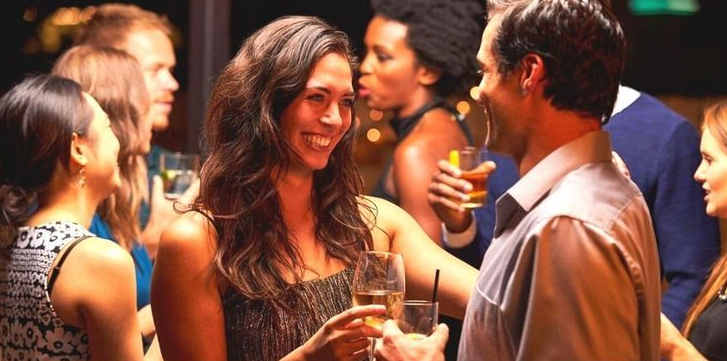
Bumble launched Plans — paid, curated in-person group dates where the venue stays secret until you’ve paid, friend-plus-one optional for an extra fee. It’s the same company that just spent a year killing the swipe, now betting that a checkout button is the new icebreaker. The paywall is doing quiet work here: a credit-card charge is the cheapest no-show filter ever invented, which is why event organizers have leaned on deposits for decades. Romance, meet revenue ops.
Unlike Bumble, we won’t charge you to meet someone — we’ll knock $500 off instead. Digest readers get $500 off the Dating Pro Plus plan with code 2606, through June 12.
Hello Group prints $49M and shrugs
China’s Hello Group reported Q1 revenue of RMB 2.39B ($353M) and $49M profit, guiding Q2 to $362–377M and holding a $444M overseas-revenue target for the year, even as domestic tax pressure bites. The interesting part for builders: growth is coming from overseas and from new AI and social-discovery features bolted onto Momo and Tantan — the same playbook of “add discovery, monetize patience” that funds every mature dating platform once swiping plateaus.
👉 Curious what your own numbers could look like? Try the ROI calculator.
Match Group keeps recalculating the runway
Match Group’s stock narrative this week was all about navigating shifting growth expectations — the polite analyst phrase for “the swipe economy matured faster than the spreadsheets assumed.” The lesson trickles down to every operator: the era of free user-growth from app-store novelty is over, and retention plus monetization now carry the model. When the biggest player feels that gravity, it’s usually a preview of what reaches smaller platforms 12–18 months later.
Wealthy men are hiring humans again — demand up 58%
New research from luxury matchmaker Selective Search (n=359 affluent and high-net-worth US men, surveyed March 25–28) found male interest in human-led matchmaking up 58% year over year. Among the ultra-high-net-worth slice, 47% would walk away from a service over weak confidentiality and 34% call apps “too transactional.” The signal isn’t nostalgia — it’s that the top of the market will pay a premium for discretion and a curated network, exactly the gap a swipe feed structurally can’t fill.
👉 Built for matchmakers? See Matchmaking Edition.
Hinge’s CEO had to answer for “designed to be deleted”
CNN put Hinge’s CEO on the spot: does the app really want you to leave? The slogan is seven years old now, and it remains the boldest positioning bet in dating — a product publicly promising its own churn. It works precisely because it reframes success as the user’s outcome, not session time; a reminder that the strongest brand in a category is often the one willing to say the quiet part out loud.
Texas just made age checks an app-store problem
On May 28 the Fifth Circuit lifted the injunction on Texas’s App Store Accountability Act (SB 2420), letting it take effect while appeals continue. The law pushes age verification up to Apple and Google: minors must link to a parent’s account, and developers must age-rate their apps. For dating operators it’s a structural shift — compliance moves upstream to the store, but the reputational risk of underage access stays squarely on you. At least nine states have similar bills in motion, so this is a preview, not a one-off.
👉 See the 300+ features your platform can ship from day one — compare editions.
The Dutch app that dates more by swiping less
Breeze, the Dutch app built around forcing real-life meetings, is drawing converts — one reviewer claimed more dates in three months than the prior five years — and is expanding in London with gradual but real traction. The mechanic is almost rude in its simplicity: remove the chat layer that lets people stall forever, and the only path forward is a calendar invite. Friction, deliberately added, as the feature.
Grindr users now prefer personality over the gym selfie
A Grindr survey of UK users found 83% think the best profile photo reveals character, not just physique — a turn away from filtered, blurry gym shots toward something that reads as real. It tracks with the broader authenticity backlash against polished, AI-assisted profiles: as everyone suspects everyone else of editing, the unedited photo becomes the credible one. Trust is the new filter.
The Guardian to AI cupids: thanks, but no
A Guardian opinion piece pushed back hard on dating apps now offering AI as matchmaker, arguing the tech that failed to deliver romance shouldn’t get a second chance dressed as a chatbot. It’s the loudest version of a real consumer mood — fatigue with automation in a deeply human domain. For builders the takeaway isn’t “avoid AI,” it’s “let users see the human,” because the market is starting to price authenticity higher than convenience.
👉 Have a niche idea and want a build quote? Get a free quote.
BLK will literally pay for your gas to meet IRL
Match Group’s BLK is handing $500 gas gift cards to 10 users to nudge them toward in-person dates — a blunt response to its own survey finding 77.6% feel financial anxiety around dating and a date now costs 12.5% more than a year ago. The giveaway is almost funny, but it names the real friction of 2026: the bottleneck isn’t matching, it’s the cost and effort of actually showing up. Subsidize the last mile and you convert chats into dates — the only metric that ever mattered.
And finally: a dating app where the dealbreaker is the vaccine
The “Unjected” app for unvaccinated singles is facing backlash for hosting in-person meetups — proof that in 2026 there’s a niche dating product for genuinely every belief system, however fringe. The underlying lesson is almost wholesome for operators: dating is the one category where hyper-specific niches don’t shrink your market, they define it. Somewhere a spreadsheet insists the total addressable market for “people who agree with me about everything” is exactly one. The apps keep launching anyway.
Still reading? That’s more commitment than most first dates. Reward it: code 2606 takes $500 off the Plus plan until June 12 — after that, it ghosts you.