



Digest: Bumble’s AI made the stock jump 22%. Hinge’s CEO said that’s the problem.
Tinder holds its biggest product event ever — and announced more new features than the last three years combined
At SPARKS 2026, Tinder unveiled AI-powered photo selection that scans your entire camera roll and picks your best shots based on your “vibe.” You no longer have to decide what to show strangers — the algorithm has opinions. Also new: astrology compatibility mode, music matching, virtual speed dating, and in-person events organized through the app. It’s a full ecosystem play, not a feature drop.
The camera roll feature is the one to actually watch. Tinder sees your photos before you choose what to share — and builds a taste profile from them automatically. Whether your camera roll is ready for that level of intimacy is between you and your phone.
Bumble launches AI matchmaker “Bee” — stock jumps 22%, best single day in four years
Bumble replaced swiping with curated AI suggestions and called it a platform overhaul, not a feature release. Wall Street agreed: 22% gain on earnings day. The AI assistant Bee also coaches users through conversations. Whether it coaches them toward actual dates or toward staying on Bumble longer is the $1B question the quarterly report doesn’t answer.
Hinge CEO: “AI is replacing the friction in dating. That’s not a good thing.”
Jackie Jantos went on record with a warning most app CEOs are afraid to say out loud: removing all friction from dating destroys the experience. She also refuted algorithm bias claims and explained why Hinge is growing while competitors are shrinking. The irony that she published this the same week Bumble launched an AI matchmaker was not lost on anyone paying attention.
OkCupid shared 3 million user photos with a facial recognition firm. FTC fine: $0
Match Group settled FTC enforcement over OkCupid sharing user photos — without consent — with a facial recognition company. Financial penalty: nothing. The FTC called it resolved. Three million users called it a Tuesday. This sets a precedent that’s either reassuring (companies cooperate) or alarming (no actual teeth), depending entirely on which side of the data you sit.
Spark Networks — JDate, Christian Mingle — files for US insolvency
The parent company of JDate and Christian Mingle brings its German insolvency proceedings to the US. Spark built an empire on faith-based matching and niche positioning. The collapse is a direct reminder that audience clarity is not a business model — monetization, retention, and traffic discipline still apply regardless of how well you know your niche.
AI use in dating jumps to 36% — but most users call it dishonest
Arrows survey: over a third of dating app users now use AI in some form — writing bios, crafting openers, generating responses. And most of them feel bad about it. 16% would break up with someone who used AI in dating. 22% see it as a useful relationship tool. The industry is building features users want but are too embarrassed to admit they use. Carry on.
Dating Pro launches Chat Operator 26 — your AI employees just got a raise

We quietly rebuilt the Chat Operator from scratch. The old 2209 panel had 5 counters and a prayer. Version 26 has a revenue funnel, AI vs human comparison table, and a dashboard that tells you exactly which operator is making money and which one is costing you lunch.
The numbers from our demo: AI operator costs $2.70/day and generates $89/day. That’s a 33x return. For context, your Google Ads are probably doing 3-5x and you’re calling that a win.
Setup takes 5 minutes. Pick your niche (Adult or Mainstream), paste your AI key, and your first user conversation starts before your coffee gets cold.
Oh, and it works with any dating platform via API — not just Dating Pro. We’re platform-agnostic now. Please don’t tell our marketing team.
8 pre-release licenses at $3,500 (goes to $4,900 at public release). Already own 2209? $2,500 with trade-in.
See the live demo and pricing: https://www.datingpro.com/chat-operator-dating-site
Sonder launches with a sign-up designed to be annoying — and it’s working
New dating app Sonder built friction into onboarding on purpose. The assumption: anyone who pushes through a slow, irritating sign-up is serious about finding a relationship, not collecting matches. Early retention data supports the theory. The entire industry spent five years removing every possible obstacle to sign-up. Sonder is putting them back deliberately.
Tinder now requires a face scan for all new UK users. Netherlands is next.
Identity verification is becoming mandatory infrastructure across Europe, not an optional safety layer. Ofcom pressure drove Tinder’s UK rollout; Dutch regulators followed with their own push. Ofcom is simultaneously consulting on cyberflashing and self-harm content rules. Operating a dating platform without verification in Europe is becoming a regulatory liability, not just a PR risk.
Grindr releases 2026 roadmap — and the entire thing is AI
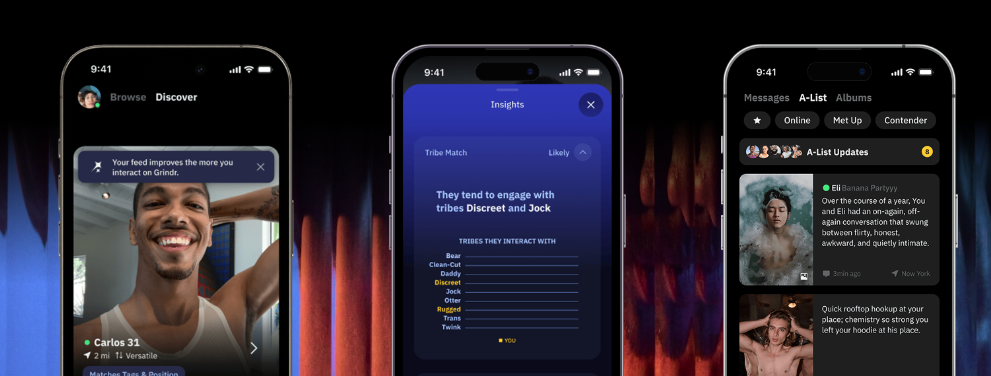
Grindr published its product roadmap: the headline is gAI, a native AI layer built across matching, conversation, and personalization. Safety features for LGBTQ+ Winter Olympics athletes also shipped. The roadmap is ambitious. Grindr’s track record with ambitious product announcements and actually shipping them on time is a separate conversation worth having.
France signs a formal charter with dating apps against homophobic ambushes
The French government coordinated a multi-platform agreement with major dating apps after a pattern of attacks on LGBTQ+ users who were ambushed following app meetups. The charter includes safety feature requirements, reporting protocols, and law enforcement coordination. First time a national government has done this specifically for dating app safety. Other governments are watching.
From the Dating Pro blog this month
What does it actually cost to build a dating app in 2026? We broke down every line item.
Dating app marketing from zero budget: the channels that work before you have an ad spend.
Crush, WABLE, Three Day Rule: small startups making big moves in March.
IRL meetup services are filling up with dating app defectors
Morning Brew tracked a measurable shift: singles burned out on swiping are moving to structured in-person events — matchmaker-curated gatherings, friend-introduced groups, activity-based meetups. The apps are responding with their own IRL events (see: Tinder SPARKS). Whether an app-organized offline experience counts as actually offline is a question for product managers and philosophers.
Research confirms: story bios massively outperform bullet-point bios
New study published on PsyPost: narrative dating profiles generate significantly more engagement than list-format bios. People respond to stories, not specs. The direct product implication — every app that uses “Add 3 interests” prompt fields is leaving match rates on the table. Redesign your onboarding accordingly.
The League expands to India — invite-only, verified LinkedIn, entering a 1.4B market
The exclusive, curated dating app is betting that India’s urban professionals want something distinct from Tinder’s volume-first model. The League’s slow approval, quality-over-quantity positioning is a direct response to swipe fatigue — in a market where Bumble and Tinder are already competing loudly. Entering India right now is either perfectly timed or extremely brave. Possibly both.