




Essential Dating App Features for a Successful Match Experience
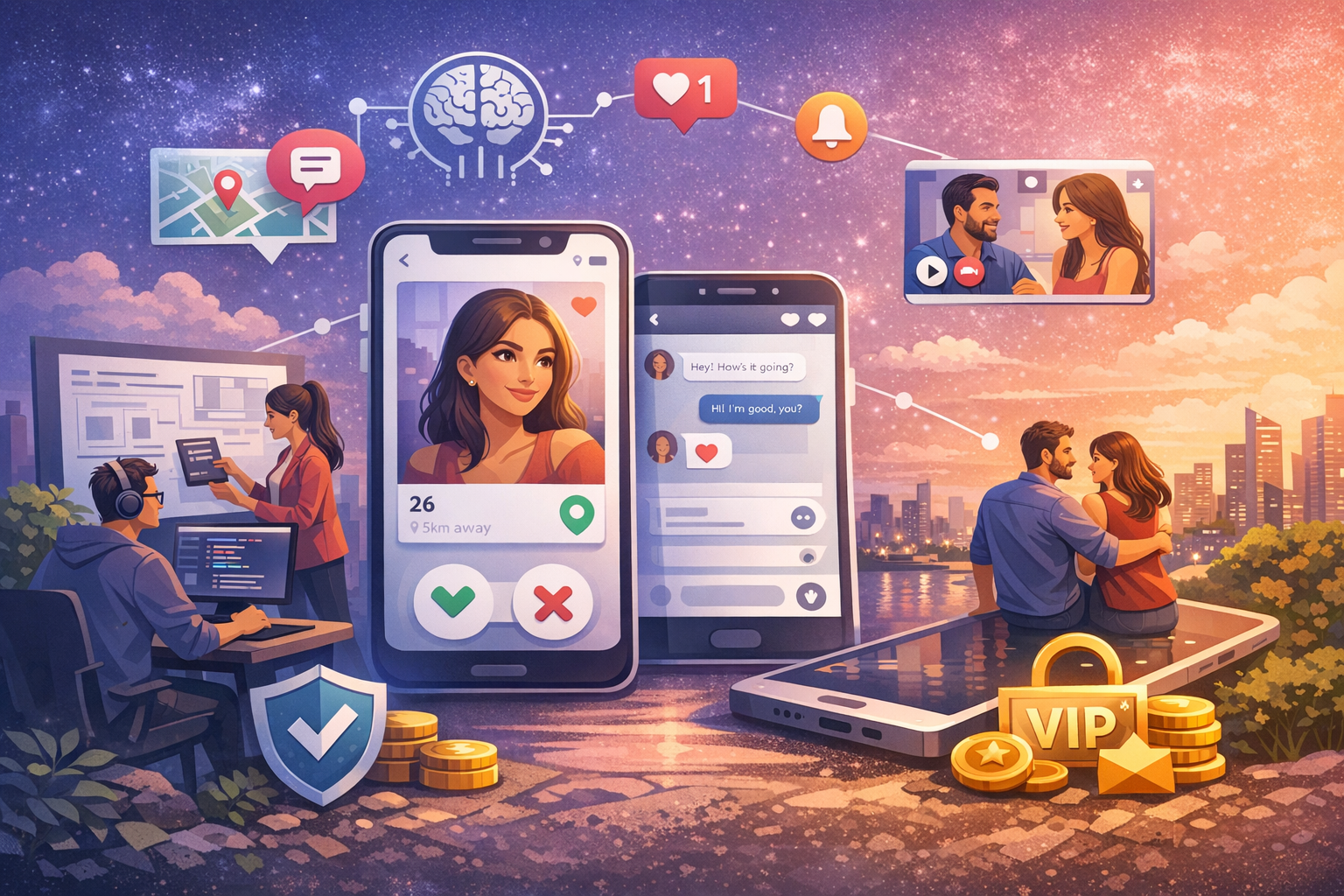
Must-Have Dating App Features for Startups: What to Build First (and What to Skip)
Key Takeaways
- A dating app MVP in 2025–2026 can launch in 3–4 months if you focus on 6–8 essential features instead of copying Tinder or Bumble feature-for-feature.
- The core MVP scope includes: onboarding, matching feed with smart filters, chat, basic safety and verification, push notifications, and simple monetization with 1–2 paywalls.
- Advanced AI matching, video calling, events marketplaces, and deep analytics are “nice-to-have later” features that often kill early timelines and budgets when added too soon.
- Dating Pro’s team has ready-made modules for matching, chat, payments, and moderation that reduce cost and risk for first-time founders.
- This article is a practical, founder-oriented guide with short sections and concrete recommendations—no fluff, just actionable trade-offs.
Introduction
This guide is designed for startup founders and product managers who want to build a successful dating app MVP. Understanding which dating app features to prioritize can make the difference between rapid growth and costly delays. The online dating market hit a projected $9.65 billion in 2024 and continues expanding at roughly 7.4% annually through 2030. Much of this growth comes from niche apps targeting specific demographics—religious communities, hobby enthusiasts, regional users—which now represent over 30% of new launches.
Choosing the right dating app features is critical for startup success.
Yet here’s the uncomfortable truth: over 90% of dating apps fail within the first year. The culprit isn’t usually a bad idea. It’s a bloated MVP scope. Founders try to build the next Tinder or Bumble from day one, packing in advanced features before validating whether anyone even wants their core concept.
This guide is specifically for MVPs. Tinder launched in 2012 with a bare-bones swipe interface and iterated for years. Bumble debuted in 2014 with one key differentiator—women-first messaging—and built complexity over time. You don’t need to clone all the dating apps to find your first users.
The goal here is simple: decide what to build in version 1.0, what to postpone to 2.0+, and how Dating Pro can help design and implement a realistic roadmap that gets you to market fast.
How to Prioritize Dating App Features for an MVP
Before you write a single line of code, you need a prioritization framework. Without one, every feature request feels equally urgent, and your timeline balloons.
Here’s a three-tier system that works for dating applications:
Must-Have (MVP Core)
- Features that directly affect sign-up, first match, and first conversation
- Includes: onboarding, user profiles, matching feed, chat, basic trust and safety
Nice-to-Have Later (Post-MVP)
- Improves retention and revenue but isn’t critical for your first 1,000–10,000 users
- Includes: AI-assisted matching, rich analytics, in-app video chat, profile performance insights
Avoid at MVP
- Complex features with high cost and unclear early value
- Includes: full events marketplace, elaborate gamification systems, social graph import, live-streaming
Mapping Features Against Effort and Impact
For each potential feature, ask two questions:
| Question | How to Measure |
|---|---|
| Impact on core metrics | Sign-up rate, first match rate, 7-day retention |
| Implementation effort | Engineer-weeks, external dependencies, QA complexity |
| Here’s a concrete example of what can go wrong: | |
| A founder wants short-form video profiles, an AI profile coach, and live events—all in version 1. Based on industry data, this approach can double costs from $50,000–$100,000 to $150,000+ and delay launch by 3–6 months due to video processing pipelines, custom ML models, and event logistics. |
Dating Pro can help run this prioritization workshop quickly because the team has worked on dozens of dating MVPs and offers professional development services for creating and scaling custom dating apps. They know which features actually move metrics for early-stage apps and which ones just sound impressive in pitch decks.
Core MVP Dating App Features You Should Build First
This section covers the essential dating app features that belong in your first release. Each one is proven across mainstream dating platforms but implemented here in a leaner, startup-appropriate version.
Seamless Onboarding and Authentication
Your sign-up flow is the single biggest drop-off point in any app. Email and phone sign-up should be your default, achieving 85–90% completion rates when you minimize friction to 3–5 steps before users see potential matches.
Optionally integrate Google or Apple logins if your target audience is 25+ years of age, which can boost conversions by around 20%. But avoid lengthy questionnaires at this stage—defer them until after the user’s first match. Progressive profiling captures 2x more data without hurting sign-up rates.
User Profiles with Photos and Key Attributes
Your profile photos and key attributes need to balance completeness with simplicity:
- 3–6 photo slots with compression under 2MB each for fast loading
- A 150–300 character bio
- 5–10 key attributes tied to your matching logic: age, gender, location (within 1km accuracy via GPS), and 3–5 interests
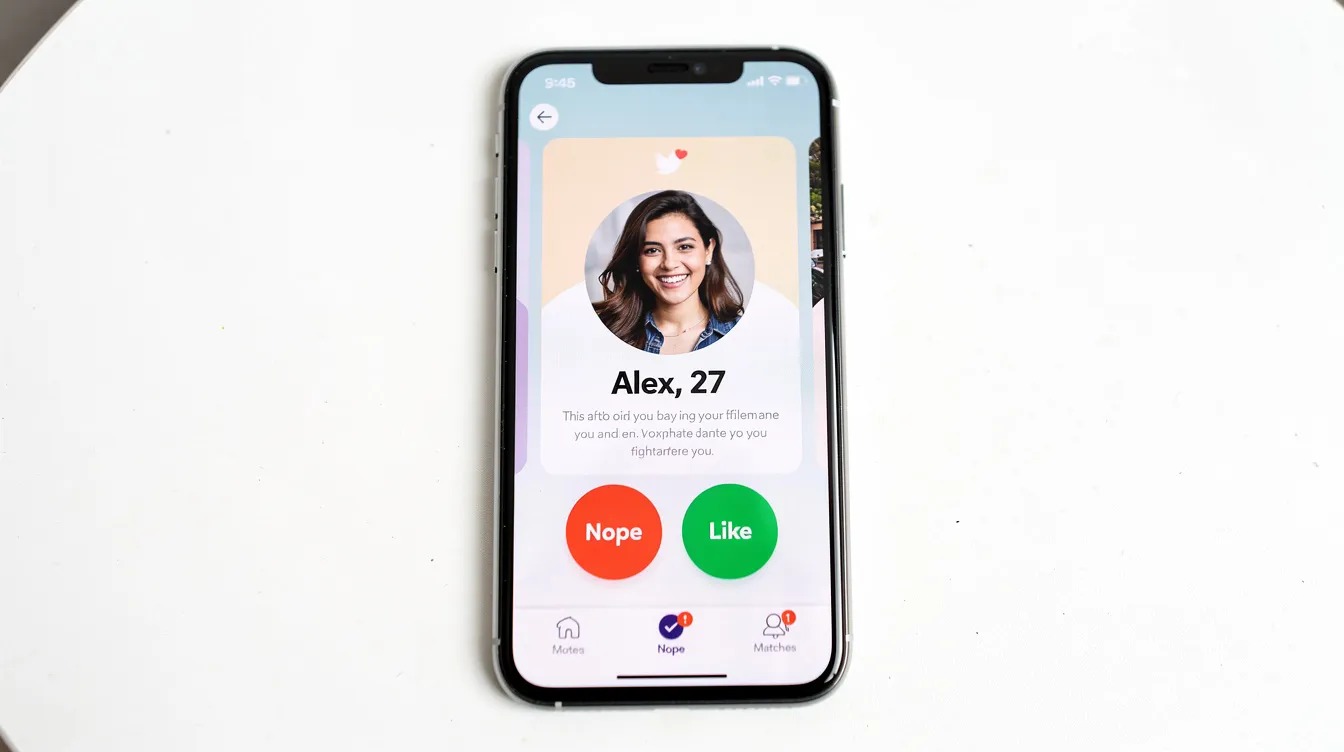
Use a simple user interface pattern—stacked cards like Tinder or prompts like Hinge—that displays main info at a glance. Avoid endless scrolling that tanks engagement.
Smart but Lightweight Preference Filters
Start with basic filters:
- Age range (e.g., ±5 years)
- Distance radius (default 10–50km)
- Gender/identity toggles
- Maybe 1–2 niche-specific filters if relevant to your app (e.g., “wants kids” or smoker/non-smoker)
Advanced filters like income, religion subtypes, or politics can wait for premium tiers. Granular options beyond basics yield diminishing returns with a user base under 5,000 users. Let people search and find matches based on specific criteria later—not now.
Advanced search features in dating apps allow users to filter potential matches based on specific criteria such as interests, location, and lifestyle choices.
Core Matching Feed (Swipe or Card List)
Decide early: do you want swipe-style (like Tinder or Bumble) or tap-to-like in a vertical feed (Hinge-style cards)?
Swipe mechanisms create gamified experiences that trigger dopamine loops, yielding 15–25% match rates. Users indicate they are interested by swiping right or disinterested by swiping left, which helps refine matching algorithms. Tinder’s swipe mechanic creates engagement loops similar to those found in gaming, making the process of matching more addictive. But Hinge-style cards encourage more thoughtful engagement with each profile.
For your ranking algorithm, start simple:
| Signal | Weight |
|---|---|
| Distance | 40% |
| Recency | 30% |
| Preference overlap | 30% |
| This rule-based approach is implementable in 4–6 weeks without machine learning, avoiding the data sparsity issues that plague early-stage apps trying to do collaborative filtering. Algorithms can also analyze the preferences and behaviors of other users to generate more accurate recommendations. Behavioral matching algorithms analyze user interactions, not just stated preferences, to refine match recommendations. |
Behavioral matching algorithms analyze user interactions rather than just stated preferences to refine match recommendations.
Simple Real-Time Chat
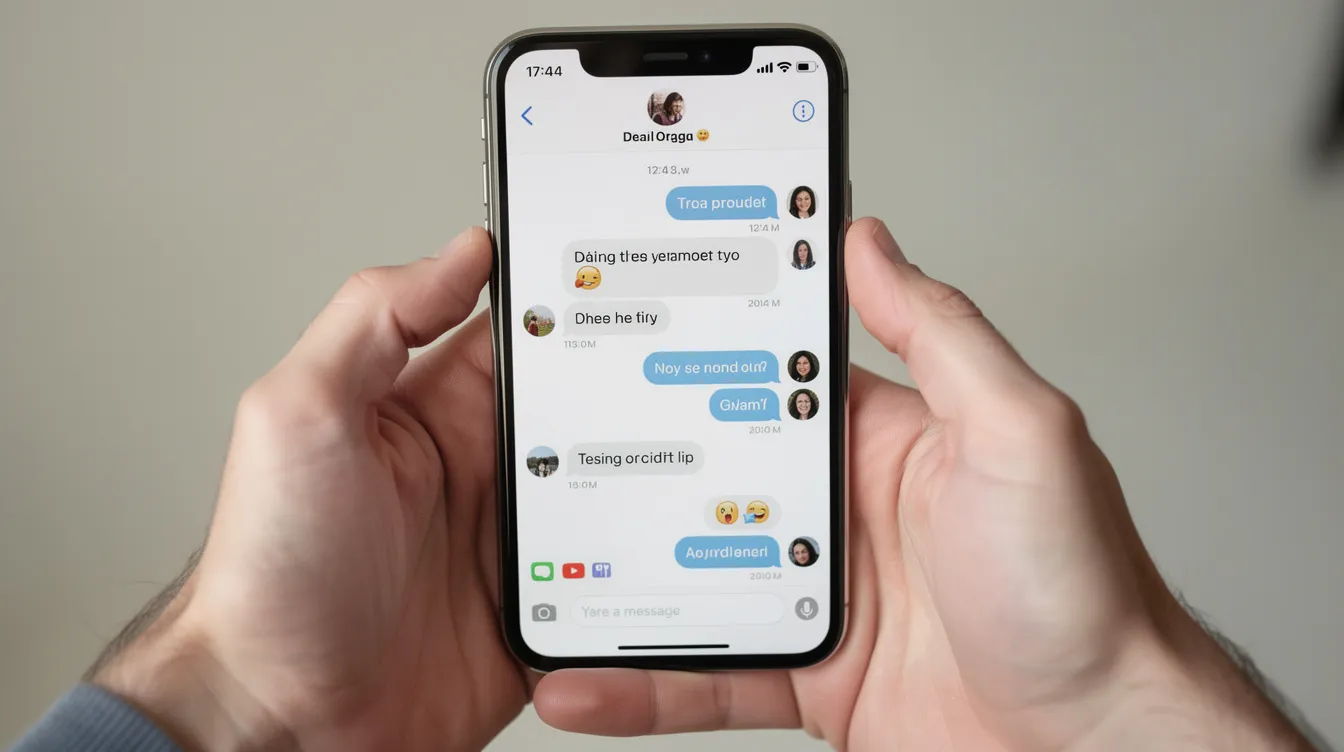
Chat is where users build a genuine connection. About 60–70% of matches convert to conversations, making this feature vital for retention.
Your MVP chat needs:
- Text messaging between matched users
- Read receipts and typing indicators
- Basic media support (photos, GIFs up to 10MB) in a second iteration
- Match-gated access and offline queuing
Use proven tech like WebSockets or a third-party chat SDK (e.g., Stream Chat) rather than building messaging from scratch. Custom chat servers cost 3x more and scale poorly for early-stage apps.
If your communication style matches Bumble’s model, you might add a soft-delete timer (e.g., 24-hour message expiry) to create urgency.
Basic Trust and Safety
With 25% of online dating users reporting harassment (per Pew Research), fake profiles and bad actors can destroy your platform’s reputation fast.
Essential safety tools for MVP:
- Block and report buttons
- Simple photo verification via liveness detection (reduces catfishing by 50%)
- Moderation queue with AI-assisted flagging (catches 95% of violations pre-human review)
- Transparent community guidelines screen during onboarding and in settings
Profile verification typically involves methods such as photo verification, social media links, or biometric data checks to ensure authenticity. Profile verification builds more confidence among users and drives positive experiences with the platform.
Push Notifications and Email Alerts
Push notifications for new matches, new messages, and likes boost re-engagement by 35%. But timing and tone matter—send at user timezone peaks (evenings have 3x higher open rates) and avoid spammy behavior.
Key triggers to implement:
- New match
- New message from a match
- Someone liked your profile (if your model exposes likes)
- Key account events (profile approval, subscription expiry)
Lightweight Monetization Hooks
You don’t need a complex subscription system at launch. Start with 1–2 paid version features:
| Feature | Typical Price |
|---|---|
| “See who liked you” | $4.99 |
| Profile boost (2x visibility for 30 min) | $2.99–$4.99 |
| Extra swipes per day | $1.99–$3.99 |
| Use existing in app purchases systems on iOS/Android and Stripe for web. This generates 20–30% revenue from day one without complex subscription management. | |
| Dating Pro has reusable components for onboarding, profiles, matching feed, chat, and payments that cut down custom development time significantly, all packaged in ready-to-launch professional dating software. |
Optional but High-Impact Features to Add After MVP
Once you’ve validated basic traction—30–40% week-1 retention and stable sign-ups—these features become powerful additions. But adding them too early overwhelms both your team and your users, and you should align them with a broader step-by-step marketing strategy for your dating platform.
AI-Assisted Matching
Move from rule-based ranking to user behavior signals: who users like, reply to, or skip. Collaborative filtering and content-based recommendations work well once you have enough data—typically 50k+ swipes.
AI-assisted matching algorithms analyze user behavior and preferences to improve the quality of matches, adapting to users’ actual interactions rather than just their stated preferences.
This can improve match quality by 25–40%, similar to how Netflix-inspired algorithms power Hinge’s recommendations. But it requires significant data before it works properly, making it a version 2.0 feature.
AI-Based Chat Helpers
Icebreaker suggestions, tone checking, and translation for cross-language matches can help users who struggle with that first message. However, these systems need:
- Moderation guardrails (early tests show 10–15% false positives)
- Clear UX to avoid feeling “bot-like”
- Budget allocation ($20k+ in fine-tuning for quality results)
In-App Video and Voice Calling
Video chat via WebRTC lets users have a quick 2–5 minute video call before potentially meeting in person. Video calling features in dating apps have become popular, especially post-pandemic, as they allow users to connect face-to-face before arranging in person meetings. Adoption runs 15–20% of matches, and it cuts flakes by 30% post-pandemic.
In-app video chat features help users get to know each other better, fostering deeper connections before meeting in person. This helps with identity verification and reduces catfishing concerns. But it’s resource-intensive with 20–50ms latency targets—definitely a v2 feature unless video calling is core to your differentiation.

Profile Performance Insights
Simple stats showing views, likes, matches, and response time help users understand their dating experience and improve their profiles. This data can drive subscription upsells once you have enough engagement signals.
Dating Pro can help schedule these features into a 6–12 month roadmap so you can show investors a clear product evolution plan, or bundle them into the broader Dating Pro x10 plan to level up your dating business.
Features Most Startups Should Skip in the First Version
Saying “no” to certain features is a strategic decision that protects your money and time-to-market—especially for bootstrapped founders.
Full-Scale Events and Meet-Up Marketplace
Organizing ticketing, RSVPs, moderation, and venue partnerships is essentially a separate product. Early apps see only 5% uptake on events features, and implementation costs $100k+ independently.
Instead, start with a simple “suggested first date ideas” block or partner venue list. Let users meet people organically through matches first, while you focus resources on proven marketing channels for dating apps.
Highly Complex Gamification Systems
Daily streaks, quests, leaderboards, in-app currencies, and badges require careful design and analytics to avoid high churn risk.
Start with 1–2 simple mechanics:
- Super Like (limited daily allocation)
- Daily boost for free users
Iterate based on user behavior data, not assumptions about what makes the app fun.
Overly Detailed Questionnaires at Onboarding
Years ago, dating site platforms asked 100+ questions upfront. This approach drops sign-up rates by 40–50%.
Modern user preferences favor progressive profiling: ask for basic info at sign-up, then request more details after the user has matched or chatted. They’re invested by then, and you’ll capture 2x more data.
Building Everything from Scratch
Custom chat servers, custom analytics, and in-house AI pipelines from day one dramatically inflate costs (3–6 months for custom chat vs. 2 weeks with SDKs).
Dating Pro’s own developments help cut development costs—you benefit from production-tested modules without commissioning every feature fresh, especially if you buy ready-to-use dating site software and apps.
How Dating Pro Helps You Design and Build a Lean, Powerful MVP
Dating Pro brings years of experience working specifically on dating and social discovery products across different regions and niches—hookup apps, serious relationship platforms, adult dating software solutions, location-based community dating, and more.
What You Get Access To
| Module | Benefit |
|---|---|
| Pre-built onboarding flows | 90% completion rates from tested UX |
| Matching engine | Scales from rule-based to AI-ready |
| Real-time messaging | WebSocket-ready with moderation hooks |
| Payments integration | Stripe and App Store ready |
| Admin/moderation tools | AI-assisted queue management |
Cost and Timeline Advantages
Reusing these components can reduce dating app development costs by 40–60% compared to greenfield builds. The shorter design and implementation phase comes from knowing typical pitfalls in dating app UX and backend scaling.
Typical Collaboration Flow
- Discovery workshop: Clarify positioning (hookup, serious dating, niche community) and define features using the must-have / later / skip framework
- UX/UI design: Prototype key flows—sign-up, profile creation, browsing, matching, messaging, subscription screens
- Technical implementation: Build and launch with analytics setup (Mixpanel, Amplitude) for the first 3–6 months
Founders can come with just an idea and target market. Dating Pro helps turn it into a realistic, cost-efficient MVP roadmap that gets to market fast with mobile dating apps you can launch without coding skills.
The world of dating platforms moves quickly. Whether you’re building for women seeking meaningful relationships, friends looking for similar profiles, or a niche community with specific lifestyle choices, focus matters more than feature count, and some founders benefit from partnering with Dating Pro on a revenue sharing model.
FAQ
How long does it typically take to build a dating app MVP?
A lean MVP with essential features typically takes 3–4 months from discovery to App Store/Google Play launch when you use existing modules and avoid advanced AI, video, and events. Adding complex features like WebRTC video calling, deep AI matchmaking, or large-scale gamification extends timelines to 6–9 months or more. The key variable is scope discipline—decide early what you’ll skip.
What is the minimum feature set I need before testing with real users?
The absolute minimum for a testable product includes:
- Onboarding and authentication
- Simple profile creation with photos
- Preference filters (age, distance, gender)
- Basic matching feed
- Mutual likes logic
- One-to-one chat between matches
- Push notifications for new matches and messages
Monetization and advanced analytics can appear in a second iteration once you confirm people are signing up, matching, and having conversations. Avoid endless swiping through features you don’t need yet.
How much does it cost to launch a first version of a dating app?
Realistic ranges vary significantly based on approach. A lean MVP using shared components typically costs $50,000–$150,000, while a full custom build aiming to clone other dating apps like Tinder, Bumble, or Hinge can exceed $300,000. Dating Pro’s matching engine, chat, and admin tools help cut costs compared to commissioning every feature from scratch—potentially saving 40–60% on initial development.
Do I really need AI matching in the first version?
No. Advanced AI matching using behavioral models, collaborative filtering, or profile embeddings requires substantial data to work properly. At launch, rule-based ranking by distance, recency, and basic user preferences is enough to test whether your perfect match algorithm resonates with your target audience. AI becomes valuable once you have 50k+ swipes and stable retention metrics—making it a strong candidate for version 2.0.
Can Dating Pro work with my existing in-house development team?
Yes. Dating Pro can provide product discovery, UX/UI design, architecture consulting, and ready-made modules that your in-house team integrates. Alternatively, they can handle full-cycle development if you lack engineers. This hybrid model leverages Dating Pro’s dating-specific experience to save time and money while letting founders maintain their own tech stack preferences and keep more control over the codebase.