



User Acquisition for Niche Dating Apps: How to Find Your Audience Without Million-Dollar Budgets

The dating app market generated nearly $5 billion in revenue for major players in 2022, and this figure continues growing. But the success of Tinder, Bumble, and Badoo doesn’t mean there’s no room for new entrants—quite the opposite, a window of opportunity is opening for niche solutions addressing specific audience needs ignored by mainstream platforms.
Why Niche Dating Apps Win Against Giants
The strategic shift from broad reach to niche focus represents the most critical decision transforming your project from a high-risk bet against industry giants into a targeted solution for an engaged, underserved audience. While Tinder tries to please everyone, you create the perfect product for a specific community—vegans, gamers, travelers, fitness enthusiasts, or representatives of alternative subcultures. These micro-communities seek “their people,” and mass platforms offer only an illusion of choice with actual disappointment.
Niche audiences possess three critical advantages: high engagement due to precise product-market fit, organic word-of-mouth within closed communities, and willingness to pay premium prices for specialized solutions. Your cost per acquisition can be 3-5 times lower than attempting to compete in the general segment, while user lifetime value is higher precisely due to emotional attachment to “their” platform. Niche dating apps with AI-driven hyper-personalization see a 25% higher 12-month user retention rate compared to generalist platforms. Deep analysis of why niche platforms are booming shows that focusing on specific audiences creates competitive advantages unattainable for mass-market players.
Foundation of User Acquisition: Defining Your Micro-Audience
Before launching any user acquisition campaign for niche dating apps, conducting deep research into your micro-audience is critical. Forget broad demographic slices like “women 25-35″—dig deeper into psychographics, behavioral patterns, and trigger pain points. Use SWOT analysis to evaluate your niche’s strengths: presence of active online communities, specific events and meetups, recognizable influencers, thematic groups.
Create a detailed pain point map with five dimensions: the pain itself, emotions it triggers, consequences of not solving the problem, how your product addresses the pain, and marketing formulation. For example, for a traveler dating app, the pain is “impossible to find a partner who shares passion for travel,” emotion is “loneliness on trips and feeling forced to choose between relationships and dreams,” consequence is “compromises killing identity,” solution is “matching algorithm based on travel style and trip maps.”
Hyper-Local Launch Strategy
Forget about national or even city-wide launches—your first goal is one university campus, one coworking space, one dense neighborhood with community consciousness. The hyper-local strategy for dating apps works on the critical mass effect: when enough users appear simultaneously in a limited location, the product begins delivering real value and word-of-mouth kicks in.
Choose a location where your target audience is maximally concentrated—a gym for fitness-oriented apps, a neighborhood with high IT professional concentration for geek dating, a campus known for alternative culture. Attract the first 100 users personally: stand with a tablet at the entrance, organize an offline event, negotiate collaboration with the location owner. Rapid MVP launch for concept testing in real conditions allows validating hypotheses before massive marketing investment. Only when user density in the first location reaches critical mass and retention shows healthy numbers should you move to the next micro-market.
ASO as the Cornerstone of Organic Traffic
App Store Optimization remains the most cost-effective user acquisition channel for niche dating apps with ROI reaching 300-500% when properly implemented. In 2026, Apple and Google prioritize apps with high retention and engagement even more strongly, which plays into the hands of niche solutions with engaged audiences. ASO for dating apps requires a maximally clear and detailed strategy accounting for the specifics of a highly competitive market.
The first stage of ASO promotion is collecting relevant semantics in your segment using computational linguistics methods to cover practically all words and expressions used in App Store searches. Deep linguistic keyword research technologies allow collecting a large base of relevant search queries in any language, which is critical when promoting in different countries. Cluster keywords into low-, medium-, and high-frequency queries, form the semantic core, and analyze competitors’ ASO policies.
Semantic Keyword Strategy for Dating Apps
The semantic core structure for a niche dating app should balance between highly specialized queries for your niche and broader dating category queries. High-frequency queries like “dating app” or “meet singles” will give you visibility but low conversion due to intent mismatch, so your focus should be medium- and low-frequency queries with direct indication of your niche.
Include the primary keyword in the app title (30-character limit for iOS), in at least one subtitle, in the description, and in all screenshot alt-texts. For a traveler dating app, semantics might include: “dating for travelers,” “travel partner app,” “meet travelers,” “nomad dating,” “backpacker connection,” and localized versions for target markets. Distribute keywords evenly across all app page zones without spamming—in 2026, App Store and Google Play algorithms harshly penalize keyword stuffing by lowering search rankings.
Visual Optimization: Screenshots and Previews
Screenshots and video previews deliver 30-40% conversion to install when properly optimized. In 2026, users make install decisions within 3-5 seconds of viewing the app page, and your task is to instantly communicate unique value specifically for your niche. The first screenshot should scream about your specialization: not abstract people silhouettes, but specific visual markers of your community—backpacks and maps for travel dating, barbells and protein shakers for fitness dating, game controllers for gamer dating.
Apple Search Ads allows testing different screenshot sets by launching campaigns with different creatives and comparative metrics analysis. Create 3-4 visual presentation variants and run A/B testing through Custom Product Pages, tracking conversion from impressions to clicks (TTR) and clicks to downloads (CR). The winning combination becomes primary for organic traffic, while other variants are used for targeting different micro-segments within your niche.
Apple Search Ads for Precision Targeting
Apple Search Ads provides a unique advantage for user acquisition of niche dating apps: the platform doesn’t use SKAN and doesn’t require ATT consent for user attribution, providing accurate attribution unlike other iOS app traffic sources. You get detailed metrics for each keyword with the ability to track conversions to first app launches and target actions like profile creation, first message, or subscription purchase.
Start with a Search Results Discovery campaign to find new search phrases relevant to your app through search and broad match types while actively adding negative keywords. This allows discovering non-obvious audience queries with strictly limited budgets of $10-30 per day for testing. After collecting data for 2-3 weeks, transition to precise targeting on converting keywords, raising bids on top performers and disabling ineffective directions.
Targeted Advertising on Minimal Budget
Facebook and Instagram remain relevant channels for dating app user acquisition with proper use of behavioral targeting and interest targeting. The secret to effectiveness on minimal budget is maximally narrowing the audience to your micro-niche through combination of interests, behaviors, and demographics. For a yoga lovers dating app, targeting might look like:
- Interest: “yoga”
- Behavior: “regularly attends fitness events”
- Demographics: “25-40 years old, single”
- Geo: “major cities with developed yoga culture”
Meta’s web-to-app campaigns provide broad reach and low CPI (cost per install), though targeting and post-install engagement can be more challenging compared to direct installs. Start with a $50-100 budget testing 5-7 audience hypotheses over a week, tracking not just CPI but retention on days 1, 3, and 7. Measuring cost per registration (cost of a user with completed profile) and cost per first message (cost of a user who sent the first message) is important, as these metrics better correlate with long-term user value than just installs.
Content Marketing: Building Niche Expertise
Content marketing for user acquisition of niche dating apps works long-term, building expertise and trust in your micro-community. Instead of creating content “about dating in general,” focus on specific problems and interests of your niche—travel hacking guides for traveler dating apps, nutrition protocol breakdowns for fitness app couples, reviews of best first date locations for gamers.
Distribute content activity across three formats with different goals:
- Long articles (3000-5000 words) for SEO traffic and expertise demonstration
- Short social media posts for engagement and discussions
- Video content for YouTube and social platforms with high virality
Each piece should answer a specific audience question without introductory constructions and unnecessary words—in 2026, search engines prioritize concisely presented content where each paragraph solves a specific user task.
Community-Driven Approach
The most successful niche dating apps build around existing communities rather than trying to create them from scratch. Find where your target audience already gathers online—specialized subreddits, Facebook groups, Telegram channels, thematic forums—and become part of these conversations long before you start talking about your product.
If your app is for avid hikers, actively participate in hiking subreddits sharing expertise on routes and gear for several months before launch. When announcement time comes, the community already knows you as an expert and insider, which gives an order of magnitude warmer reception than cold advertising. Create a referral program giving the first 100 users real incentives to bring friends—not abstract “bonus points” but concrete value like free premium access for a month for every three active referred users.
Micro-Influencers vs. Celebrities
Partnering with influencers who have large followings in your target audience can effectively build brand awareness and drive app installs. However, for niche dating apps with limited budgets, micro-influencers with 5-50 thousand subscribers deliver better ROI than celebrities with millions of followers.
Micro-influencers possess three critical advantages:
- High trust and engagement: 3-8% engagement rate vs. 1-2% for macro-influencers
- Affordable pricing: $100-500 per post vs. $5000+ for celebrities
- Deep partnerships: Willingness for long-term product use and authentic promotion
Research shows micro-influencers are way more affordable than celebrities, with most brands spending between $1k to $10k annually on mobile app influencer marketing. Offer them free access to premium features or commission on installs through their unique referral link instead of fixed payment—this lowers your risks and aligns interests. Micro-influencers create relatable and authentic content that resonates with their audience, driving higher engagement and app interest than staged advertising.
Strategic Brand Partnerships
Collaborations with brands and companies serving your target audience open access to already warmed traffic at minimal costs. For a traveler dating app, logical partners are outdoor gear manufacturers, hostels and coworking spaces for digital nomads, tour operators specializing in adventure travel.
Win-win partnership structure can include:
- Partner places information about your app in email newsletter to their base (you get targeted traffic)
- You provide promo code discount for partner’s clients (they get additional value for their audience)
- Joint offline events where users of both sides are present (mutual brand amplification)
Such partnerships expand your reach by introducing the app to partner subscribers and build trust through association with a respected brand in your niche.
Referral Programs with Real Incentives
Referral mechanics remain one of the most effective user acquisition tools for dating apps with viral coefficient reaching 1.5-2.0 when properly implemented. The critical mistake of most referral programs is abstract rewards like “bonus points” or “virtual coins” that have no real value for users.
An effective referral program provides concrete measurable value for specific actions:
- A week of premium access for each friend who created a profile and sent the first message
- A month of premium access for three active invited users
- Eternal priority in feed for ten converted referrals
Properly balancing free and paid features is critical for monetization—learn which elements should be free and which premium to maximize conversion and retention. Mechanics should be transparent with visual progress display and instant reward crediting after condition fulfillment. Add a social dimension showing the top-10 monthly referrers with special in-app status—gamification and public recognition can motivate more strongly than material rewards for certain audience segments.
Alternative monetization models going beyond classic Tinder Gold subscriptions can significantly increase revenue per user when properly implemented.
User-Generated Content as Growth Engine
User content—dating stories, photos of couples who met through the app, first date reviews—creates social proof and emotional connection much stronger than any professional advertising. Real stories like “Jasmine from Texas found her match within 8 days” give the feeling that matches are authentic and relevant for potential users.
Stimulate user-generated content creation through:
- Contests with prizes for best monthly dating story
- Special “Success Stories” section in app and website with ability to share your story
- Automatic review requests after significant events (first match, first message, contact exchange)
- Gamification with rewards for community section activity
Publish these stories in all marketing materials—social media, email campaigns, landing pages, paid ads—to maximize reach and create FOMO effect for potential audience. Effective user content moderation is critical for platform safety and scam protection—develop a system for profile verification and automatic suspicious activity detection.
Metrics That Matter at Launch
Tracking the right metrics is critical for optimizing user acquisition on limited budget. Many founders focus on vanity metrics like total install numbers while ignoring quality indicators that actually correlate with product success.
Key metrics for a dating app at launch include:
- Cost per Registration: How much it costs to attract a user with fully completed profile (more important than just installs)
- Cost per First Message: Cost of a user who sent the first message (indicator of real engagement)
- Cost per Subscription or Cost per Paying User: Economics of attracting paying customers
- Retention Rate on days 1, 3, 7, and 28: Percentage of users returning to the app
Deep understanding of metrics from CAC to LTV and retention rate enables data-driven decisions about scaling channels. Use Mobile Measurement Partner (MMP) services for accurate attribution and tracking the entire funnel from ad impression to target in-app actions.
Retention Beats Mass Installs
For a niche dating app, retention is a more critical metric than volume of attracted traffic. An app with 1,000 installs and 40% retention on day 7 has healthier economics and better prospects than an app with 10,000 installs and 5% retention.
High retention signals that the product actually solves user problems and they find sufficient value to return regularly. For dating apps, healthy retention indicators look like:
- Day 1: 60-70%
- Day 3: 40-50%
- Day 7: 25-35%
- Day 28: 15-20%
If your numbers are lower, focus on improving the product and onboarding process before scaling paid channels—otherwise you’ll pour money into a “leaky bucket” attracting users who don’t stick around.
Invest in retention-boosting mechanics: personalized push notifications about new relevant matches, weekly digest with in-app activity, gamification with rewards for regular use, content that brings users back even without active dialogues. Properly designed onboarding flow can increase retention by 30-40%—pay special attention to the user’s first minutes in the app. Case study shows that chat redesign can boost retention by 25% by improving the key interaction point.
From 100 Active Users to Your First Thousand
The transition from the first 100 users to 1,000 active is a critical stage where many niche apps fail due to premature scaling or loss of focus. After successful hyper-local launch in the first location, don’t try to immediately capture the entire city or region—instead, replicate the model to a second similar micro-location.
Analyze where your first 100 users came from and which channels showed the best combination of low CAC and high retention. If organic through ASO brought 30% of installs with 45% retention, community marketing gave 25% with 50% retention, and paid ads showed 45% of installs but only 20% retention—it’s obvious you need to double down on the first two channels and either optimize or pause paid campaigns. Scaling should be methodical and data-driven with preservation or improvement of unit economics at each growth stage.
Scaling While Maintaining Efficiency
The biggest trap when scaling user acquisition is traffic quality degradation and rising acquisition costs when increasing budgets. Channels that delivered $2-3 CPI at $100/day budget start showing $8-10 CPI when trying to spend $1,000/day due to exhaustion of the most relevant audience.
Scale horizontally not vertically: instead of increasing budget in one channel by 10x, add new channels while maintaining effective budgets in existing ones. If Apple Search Ads works effectively with $200/day budget, don’t raise it to $2,000—instead add Google App Campaigns at $200/day, launch an influencer campaign at $300/week, activate content partnerships. Strategic approach to scaling from a thousand to a million users requires balance between growth and service quality preservation. This approach diversifies risks and allows finding new pockets of relevant audience without overpaying for individual channel exhaustion.
Your Niche is Waiting for Its App
User acquisition for niche dating apps in 2026 isn’t a budget war with Tinder and Bumble, but surgically precise work with a micro-audience tired of the mass-market approach. Each described strategy has proven effectiveness on real projects: from hyper-local launches with critical mass in one location to community-driven growth through existing communities. The key to success is starting small, focusing on user quality rather than install quantity, and scaling only after achieving healthy retention and engagement metrics.
The right combination of ASO optimization, micro-influencers, strategic partnerships, and user-generated content can deliver your first thousand active users with a budget of just a few hundred dollars. This isn’t theory—it’s the working practice of dozens of niche apps that today monetize their audience better than market giants thanks to deep understanding of their community’s specific needs.
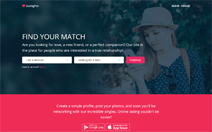
But even the most brilliant marketing strategy will crash against a low-quality product or technical problems during scaling. The Dating Pro team is ready to help you create the technical foundation for your niche dating app—from MVP for idea validation to a full-featured platform capable of scaling from hundreds to hundreds of thousands of users. Instead of spending months and tens of thousands of dollars on development from scratch, you get a proven solution with ready-made dating mechanics, monetization system, content moderation, and all necessary infrastructure for rapid launch.
Focus on what you do best—understanding your audience and building community around your niche. Trust the technological part to professionals who know the industry inside out and have helped launch hundreds of successful dating projects worldwide.
Ready to start your journey in niche dating? Connect with Dating Pro experts and get consultation on launching your project with minimal investment and maximum efficiency.
Frequently Asked Questions: User Acquisition for Niche Dating Apps
General Strategy Questions
What is the average cost to acquire a user for a niche dating app?
Cost per acquisition (CPA) for niche dating apps typically ranges from $2-8, significantly lower than the $15-25 for mainstream dating apps. This lower cost stems from precise audience targeting and higher conversion rates. However, focus on cost per registration ($5-12) and cost per first message ($8-15) rather than just installs, as these metrics better predict long-term user value.
With organic channels like ASO and community marketing, you can achieve sub-$3 CPA, while paid channels like Apple Search Ads average $4-6 for niche audiences.
How much budget do I need to launch a niche dating app?
You can successfully launch a niche dating app with $500-2,000 in marketing budget using a hyper-local strategy. Allocate:
- $200-400 for Apple Search Ads testing
- $100-300 for initial micro-influencer partnerships
- $100-200 for offline launch events
- $100-300 for creative assets
The key is starting with one micro-location (university campus, specific neighborhood) to achieve critical mass before scaling. Many successful niche apps acquired their first 100-200 users with under $500 by combining organic ASO, community engagement, and strategic partnerships.
What’s the difference between user acquisition for niche vs mainstream dating apps?
Niche dating app user acquisition focuses on depth over breadth—targeting micro-communities with laser precision rather than mass-market campaigns. Key differences include:
- 3-5x lower CPA due to precise targeting
- 40-60% higher retention rates from better product-market fit
- 2-3x better viral coefficients due to tight-knit communities
- Different channel mix: community forums, micro-influencers, and specialized content vs. broad social media ads
The hyper-local launch strategy works for niche apps but fails for mainstream platforms needing immediate scale.
How long does it take to get the first 1,000 users for a niche dating app?
With a well-executed strategy, expect 3-6 months to reach 1,000 active users. The timeline breaks down to:
- 2-4 weeks for first 100 users via hyper-local launch
- 6-10 weeks to reach 500 users by replicating to 2-3 additional micro-locations
- 8-12 weeks to hit 1,000 through organic growth and referrals
Apps rushing this process by going too broad typically fail to achieve critical mass in any location. Patient, methodical expansion with focus on retention over speed yields healthier long-term growth. Learn more about scaling from 1,000 to 1 million users.
ASO & Organic Growth Questions
What are the most effective ASO keywords for niche dating apps?
Prioritize medium and low-frequency keywords combining dating terms with your niche descriptor:
- Medium-frequency: “vegan dating app”, “fitness dating”, “gamer singles”
- Low-frequency: “plant-based singles meet”, “crossfit dating app”, “travel partner dating”
- Long-tail: “vegetarian dating near me”, “hiking partner matchmaking”, “yoga lovers connect”
Avoid competing on high-frequency terms like “dating app” or “meet singles”—your 30-character iOS title should include both “dating” and your niche identifier. Use App Store Connect Search Ads to discover converting keywords, focusing on terms with 500-5,000 monthly searches and lower competition scores.
How important is ASO compared to paid advertising for dating apps?
ASO is the foundation—it should represent 40-60% of your user acquisition once optimized, compared to 20-30% from paid channels. ASO delivers 300-500% ROI and compounds over time as your app accumulates reviews and ranking history.
A well-optimized niche dating app can generate 50-200 organic installs daily without ad spend. Start with ASO before scaling paid channels, as paid traffic becomes more effective when landing on an optimized app store page with social proof.
What’s the best way to optimize dating app screenshots for conversions?
Lead with your niche specialization in the first screenshot using visual markers your community instantly recognizes:
- Outdoor dating: hiking boots and mountain backgrounds
- Wellness dating: yoga poses and meditation elements
- Gamer dating: gaming controllers and esports aesthetics
Include short, benefit-driven text overlays (under 7 words) highlighting unique features. Test 3-4 screenshot variations using Apple Search Ads Custom Product Pages, tracking:
- Tap-through rate: aim for 8-12%
- Conversion rate: aim for 35-50%
The first three screenshots are critical as most users don’t scroll beyond them.
How do I improve my dating app’s App Store ranking?
Focus on four ranking factors:
- Keyword optimization in title/subtitle (30% weight)
- Download velocity and retention (40% weight)
- Ratings and reviews (20% weight)
- Engagement metrics (10% weight)
Increase download velocity through coordinated launches in micro-locations, boost retention with strong onboarding, and systematically request reviews from satisfied users after positive in-app moments (first match, first message). Apps with 30%+ day-7 retention rank significantly higher than those with 10% retention at equal install volumes.
Paid Advertising Questions
What’s the minimum viable budget for Apple Search Ads for dating apps?
Start with $10-15 daily ($300-450 monthly) for testing, focusing on exact match campaigns for your top 10-15 converting keywords. This budget allows sufficient data collection (aim for 100+ taps per keyword) within 2-3 weeks to identify winners.
Scale successful keywords to $25-50 daily before expanding to new terms. Apple Search Ads delivers the most accurate iOS attribution without SKAN limitations, making it the primary paid channel for niche dating apps. Expect $3-7 CPI for well-targeted niche keywords.
Should I use Facebook/Instagram ads or Apple Search Ads for my dating app?
Prioritize Apple Search Ads first due to:
- Superior targeting accuracy
- Lower CPI: $3-7 vs $5-12
- Better-quality users showing 20-30% higher retention
Meta platforms work best for awareness and remarketing after you’ve established ASO foundation. For Android, Google App Campaigns offer similar benefits to Apple Search Ads. If choosing Meta, use web-to-app campaigns targeting hyper-specific interest combinations with $50-100 weekly tests across 5-7 audience variations.
How can I target my niche audience with paid ads on a small budget?
Layer 3-4 targeting criteria to create micro-audiences:
- Interest: niche-specific hobby
- Behavior: event attendance, purchase patterns
- Demographics: age, relationship status
- Geo: cities/neighborhoods where your niche concentrates
Example for rock climbing dating app:
- Interest: “rock climbing”
- Behavior: “outdoor event attendance”
- Demographics: “single, 25-40”
- Geo: “Boulder, Portland, Seattle”
Start with $10 daily per audience combination, run for 7 days, keep only combinations achieving sub-$8 CPI with 20%+ day-3 retention.
What’s the ROI timeline for dating app paid advertising?
Expect the following timeline:
- Months 0-6: Negative ROI during user base building
- Months 6-9: Breaking even as network effects develop
- Month 10+: Positive ROI as community reaches critical mass
Dating apps require critical mass before delivering value, so early users have lower LTV until the community reaches 500-1,000 active users in each market. Focus on CAC:LTV ratio—healthy niche dating apps achieve 1:3 ratio by month 12 (if CAC is $6, LTV should reach $18+). Don’t judge paid channel performance before achieving critical mass in at least one market.
Community & Influencer Marketing Questions
How do I find the right micro-influencers for my niche dating app?
Search niche-specific hashtags on Instagram and TikTok, filtering for accounts with:
- 5,000-50,000 followers
- 3-8% engagement rates
- Authentic audience interactions
Example for hiking dating app: Search #hikingcommunity, #traillife, #backpackingadventures
Evaluate:
- Authenticity: comments quality, audience questions
- Content alignment: do they organically discuss dating/relationships?
- Audience demographics: check follower age, location
Prioritize influencers actively engaged with their community through responses and discussions. Tools like HypeAuditor or Upfluence help identify fake followers.
What should I pay micro-influencers to promote my dating app?
Offer tiered compensation:
- Free premium access (3-6 months) for initial testing
- $100-300 per sponsored post for 5K-20K followers
- $300-500 per post for 20K-50K followers
- 10-15% commission per install through their unique referral code
Commission-based deals align incentives and reduce risk—influencers are motivated to drive quality installs. Many micro-influencers prefer long-term partnerships (3-6 months, monthly fee) over one-off posts. Budget $1,000-2,000 for 5-10 micro-influencer partnerships as initial test.
How do I build a community around my niche dating app before launch?
Engage in existing online communities 3-6 months pre-launch without promoting your app. Join niche subreddits, Facebook groups, Discord servers, and Telegram channels where your audience congregates. Provide genuine value—answer questions, share expertise, build reputation.
Example for travel dating app: Actively participate in r/solotravel, r/digitalnomad with travel advice.
Once established as community member, soft-launch to those communities with “I built this for us” positioning. Early community members become evangelists driving word-of-mouth growth. Learn more about claiming your niche space.
What’s the best way to encourage user-generated content for dating apps?
Automate requests after positive moments:
- Prompt for success story after 50+ messages exchanged with a match
- Request app review after first successful date (track through in-app “we met” feature)
- Ask for photo submission after relationship milestone
Offer incentives:
- Feature couple of the month in app/website
- Premium access extension for story submission
- Entry into quarterly prize drawing
Create dedicated Success Stories section making submission easy (5 questions, optional photo upload, 2-minute process). User stories convert 3-5x better than professional marketing copy.
Metrics & Analytics Questions
What retention rate should I aim for in a niche dating app?
Target retention benchmarks by day:
- Day 1: 60-70%
- Day 3: 40-50%
- Day 7: 25-35%
- Day 28: 15-20%
Niche apps typically see 5-10 percentage points higher retention than mainstream apps due to better product-market fit. If your Day 7 retention falls below 20%, pause user acquisition and fix core product issues first.
Dating apps are unique—retention spikes when users find matches, then drops after successful relationship formation (a positive churn). Track “active searcher retention” separately from overall retention for clearer product health signals. Discover how chat redesign boosted retention by 25%.
What’s more important for dating apps: user acquisition or retention?
Retention is 3-5x more important, especially for niche apps requiring critical mass.
Comparison example:
- App A: 1,000 installs with 40% day-7 retention = 400 active users
- App B: 10,000 installs with 5% retention = 500 active users
App A outperforms despite fewer installs because it has healthier engagement, better word-of-mouth, and sustainable growth. High retention indicates product-market fit; low retention signals you’re filling a leaky bucket. Achieve 25%+ day-7 retention before aggressively scaling acquisition. Learn about key metrics for dating startups.
How do I calculate LTV (lifetime value) for dating app users?
LTV Formula: (Average Revenue Per User) × (Average Lifetime in Months)
For freemium dating apps, calculate:
- Subscription conversion rate: typically 2-8% for niche apps
- Average subscription value: $10-30/month
- Average subscription duration: 3-8 months
Example calculation:
If 5% of users subscribe at $20/month for average 5 months:
LTV = $5 ($20 × 0.05 × 5)
Add in-app purchase revenue (boosts, super likes) averaging $2-5 per user lifetime. Healthy niche dating apps achieve $15-35 LTV with $5-10 CAC for 3:1+ ratio.
What metrics should I track daily for my dating app launch?
Monitor seven core metrics daily:
- New installs: acquisition performance
- Registration completion rate: onboarding effectiveness
- Day 1 retention: product hook strength
- Daily active users (DAU): engagement level
- Average session length: engagement depth
- Matches per active user: algorithm performance
- First message rate: activation success
Set up automated dashboards in Mixpanel, Amplitude, or Firebase Analytics with these metrics. In first 90 days, check metrics 2-3x daily to catch and fix issues quickly. A sudden drop in any metric often indicates bugs or user experience problems requiring immediate attention.
Technical & Product Questions
Should I build my dating app on iOS or Android first?
Launch on iOS first for niche dating apps targeting US/Western Europe markets because:
- iOS users show 2-3x higher willingness to pay
- Better engagement metrics and lower fraud rates
- Simpler development with fewer device variations
- Apple Search Ads provides superior targeting without ATT attribution limitations
Launch Android 3-6 months later after proving iOS product-market fit and unit economics.
Exception: If your niche concentrates on Android (certain international markets, budget-conscious demographics), launch Android first.
How long does it take to build an MVP for a niche dating app?
A functional MVP with core features (profiles, matching algorithm, messaging, basic moderation) takes:
- 3-4 months with a development team
- 8-12 weeks using platforms like Dating Pro or similar turnkey solutions
Cost comparison:
- White-label platforms: $2,000-8,000 (reduces time-to-market by 60-70%)
- Custom development: $30,000-80,000 for MVP
For niche apps, speed to market matters more than perfect features—launch with 80% solution and iterate based on user feedback. Learn how to build a dating app MVP in 3 months.
What features are essential for a niche dating app MVP?
MVP must include:
- Profile creation with niche-specific fields (for hiking app: trail difficulty preference, backpacking vs day hiking)
- Matching algorithm reflecting niche criteria
- Real-time messaging
- Photo verification for safety
- Basic reporting/blocking
- Premium subscription with 2-3 exclusive features
Skip for MVP: Video chat, advanced filters, complex gamification
Focus on one unique feature that embodies your niche value—trip compatibility matcher for travel app, workout style alignment for fitness app. Launch with minimum viable features, then expand based on user requests. Explore designing the perfect onboarding flow.
How important is content moderation for dating apps?
Content moderation is critical—poor moderation destroys user trust and app store rankings.
Implement three-layer approach:
- Automated AI screening: for explicit images, spam patterns, suspicious profiles
- Community reporting: easy in-app flag buttons
- Human review: for complex cases
Budget: $500-1,500/month for moderation tools (ComplyAdvantage, Sift, Spectrum Labs) plus human moderator hours.
Niche apps with strong moderation see 15-25% higher retention as users feel safer. Apple and Google will suspend apps with inadequate moderation, risking your entire business. Learn about effective content moderation strategies.
Monetization Questions
What’s the best monetization model for niche dating apps?
Freemium with tiered subscriptions performs best:
- Free tier: core features (profile creation, limited matches/messages)
- Premium tier: unlimited likes, advanced filters, see who liked you, priority placement
- À la carte purchases: profile boosts ($2-5), super likes ($1-2)
Pricing: $9.99-29.99/month depending on niche exclusivity
Niche apps can charge 20-40% premium over mainstream apps due to specialized value. Avoid completely free or completely paid models—both reduce total revenue. Discover how to balance free and paid features.
When should I start charging users in my dating app?
Implement monetization from day one but make premium features optional. Don’t wait to monetize—you’ll struggle to convert users accustomed to free access.
Best practices:
- Ensure free users can complete core journey (create profile, see matches, send limited messages)
- Start with generous free tier (10-20 likes/day, 5-10 messages/day)
- Introduce first paywall after users experience value—typically after their first match or mutual like
Willingness to pay peaks after value realization. Explore innovative monetization models beyond Tinder Gold.
What percentage of dating app users typically pay for premium features?
Niche dating apps see 3-8% conversion to paid subscriptions, higher than mainstream apps (1-3%) due to stronger product-market fit and more engaged users.
Conversion by niche:
- Fitness and travel dating: 5-7% average
- Highly specialized apps (medical professionals, specific religious communities): 8-12%
Conversion improves with network size:
- Under 500 users: 1-2%
- 1,000-5,000 users: 3-5%
- Above 10,000 users: 5-8%+ as matching quality improves
Optimize paywall timing and messaging to boost conversion by 20-50%.
Competition & Market Questions
How do I compete with Tinder and Bumble as a niche dating app?
Don’t compete directly—dominate a micro-niche they ignore. Tinder optimizes for maximum reach; you optimize for perfect fit within your community.
Your advantages:
- 3-5x higher engagement rates
- Stronger network effects in niche communities
- Ability to charge premium prices
- Lower CAC through precise targeting
- Passionate users who become evangelists
Position as “the only dating app that truly gets [your niche]” rather than “better than Tinder.” When users say “I tried Tinder but never found [niche-specific trait],” you’ve found product-market fit.
Are niche dating apps profitable?
Yes, when properly executed. Successful niche dating apps achieve profitability with 5,000-15,000 active users compared to 50,000-100,000+ needed for mainstream apps.
Superior unit economics:
- Lower CAC: $3-8 vs $15-25
- Higher ARPU: $2-6/user/month vs $1-2
Example profitability scenario:
Niche app with 10,000 active users, 6% premium conversion at $19.99/month:
- Monthly revenue: $12,000 ($144K annually)
- Marketing costs at maturity: under $5,000/month
Path to profitability typically takes 18-30 months from launch.
What are the biggest mistakes founders make with niche dating app user acquisition?
Five critical mistakes:
- Launching too broadly instead of hyper-locally, failing to achieve critical mass anywhere
- Prioritizing installs over retention, creating a leaky bucket
- Spending heavily on paid ads before optimizing ASO and achieving product-market fit
- Targeting “everyone interested in [niche]” instead of hyper-specific community segments
- Neglecting community building in favor of performance marketing
The most successful niche apps spend 60% of effort on organic/community growth and 40% on paid, not the reverse. Start your journey by understanding why niche dating apps are booming.
Ready to Launch Your Niche Dating App?
Building a successful niche dating app requires the right combination of strategy, technology, and execution. The Dating Pro team provides turnkey solutions that help you launch faster and scale smarter—from MVP development to full-featured platforms serving hundreds of thousands of users.