






Why Matches Don’t Turn Into Conversations on Dating Apps
Introduction
This article explores the most effective engagement features for dating apps, focusing on strategies to reduce post-match silence and improve user retention. It is designed for dating app developers, product managers, and marketers who want to create more interactive, successful platforms. By understanding and implementing these features, you can boost user activity, foster meaningful connections, and ensure your app stands out in a competitive market.
Post-Match Silence in Dating Apps
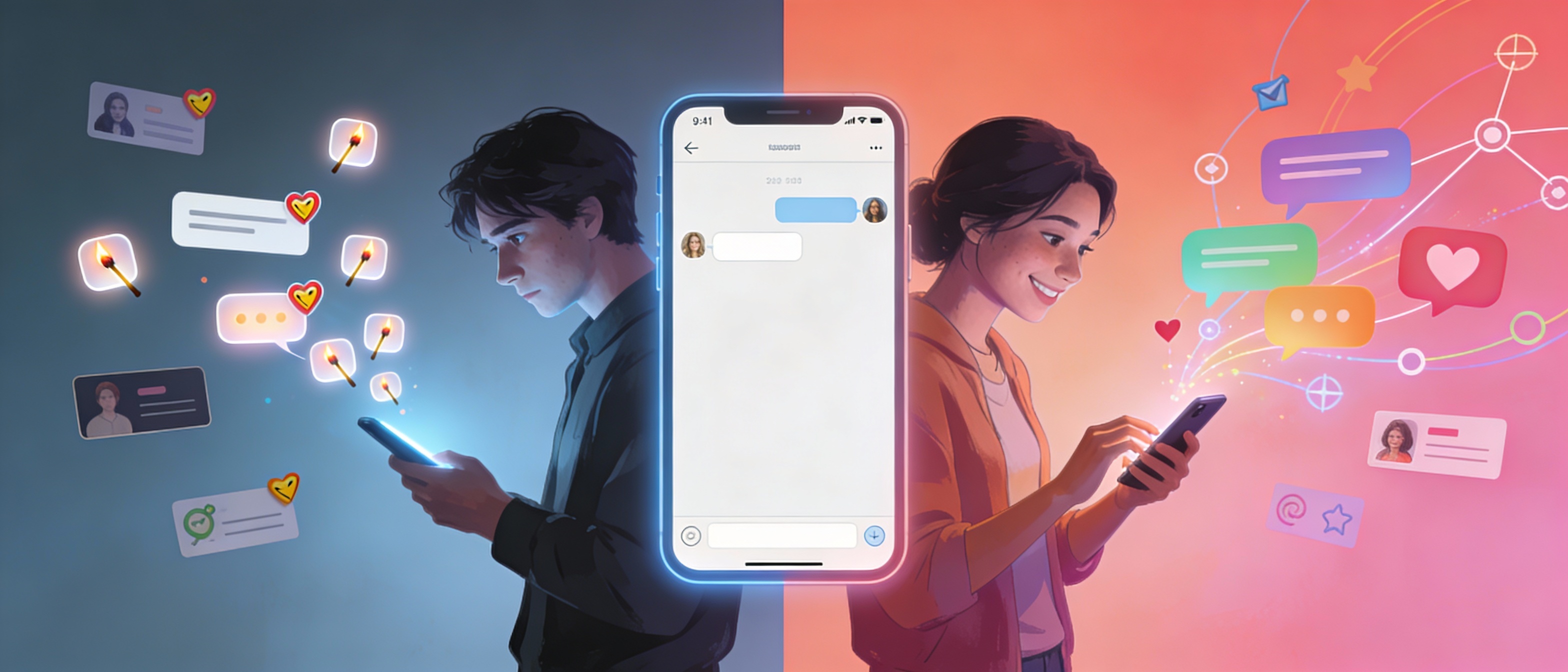
On most dating apps, a huge share of matches never turn into conversations at all: people match, stare at an empty chat box, and simply move on to the next profile. For many users it feels less like dating and more like collecting digital trophies that never come to life.
A well-designed onboarding process creates a strong first impression and is crucial for user retention. When users are greeted with an engaging, seamless onboarding experience, they are more likely to stay and interact with the app.
From a product perspective this post‑match silence kills core metrics: day‑1 and day‑7 retention, message rate per match, and the likelihood that a user ever reaches a first date through the platform. The focus should be on user needs and experience, not just following trends. Effective dating app development software, including robust post-match engagement features, is essential for the business success of dating apps. Additionally, a smooth onboarding process is crucial for user retention. Fixing this is not about “more swipes” or “better discovery”—it is about what happens in the first minutes and hours after a match.
Mechanics to Trigger the First Message and Increase User Engagement
Leading dating apps use structured mechanics so users never face a blank screen alone. Many various dating apps leverage gamification, quizzes, and AI tools for chat prompts and icebreakers to increase engagement and boost engagement, especially during onboarding, helping users feel comfortable and encouraging them to participate from the start.
Gamification refers to the use of game-like elements such as badges, points, and interactive quizzes to make the matchmaking process more engaging and fun. Gamification techniques in dating apps can increase user engagement by making the matchmaking process more interactive and enjoyable, allowing users to earn badges for completing tasks and being active in the community. Gamified onboarding processes and in-app games can guide users to reveal their interests and feel more comfortable in the app, keeping them engaged and encouraging them to stay on the platform longer.
Icebreakers can help users initiate conversations and reduce the intimidation of making the first move. Profile prompts offer curated questions for users to comment on matches’ profiles easily.
Profile-Based Prompts
- Apps like Hinge let users comment directly on photos or written prompts, turning every profile element into a built‑in icebreaker instead of a generic “hi.”
- Profile prompts offer curated questions, and people tend to respond better to these than to open-ended requests.
- Users also prefer advanced search filters to find potential dates based on specific criteria such as age, location, interests, and even body type, making it easier to connect with matches who fit their preferences.
Guided Question Flows and Mini-Games
- Some products embed “question games” or “20 questions”‑style flows right in chat, so the first interaction is choosing answers rather than composing a perfect line from scratch.
- This gamification lowers anxiety and keeps users tapping instead of freezing on the first message.
- In-app games and fun onboarding quizzes can help users reveal basic information like age, gender, and location, guiding them to share more about themselves and feel more comfortable in the app.
- Gamified onboarding processes and interactive quizzes also help users explore their personalities and preferences, making the experience more enjoyable and interactive for different target audiences.
Progress Bars for Profile Completion
- Many dating apps use progress bars to visually indicate how close users are to completing their own profile.
- This leverages the psychological ‘completion bias,’ encouraging users to finish entering their basic information and upload rich media like images and videos, which increases engagement and helps attract more potential dates.
Rich Media Messaging
- In-app messaging features that include rich media—such as voice notes, GIFs, images, and video messages—enhance communication between matched users, making conversations more dynamic and helping users assess compatibility and build intimacy.
- Built-in video chatting and video profiles allow users to screen potential matches for safety and compatibility before meeting in person.
Soft Incentives to Speak First
- Small, visible rewards like profile boosts, badges earned through gamification for completing tasks and being active, or “extra visibility for starting the conversation” can nudge users to send that first line without feeling forced.
- The key is positive reinforcement, not penalties for staying silent.
- These incentives are especially effective when tailored to specific target audiences, further increasing engagement.
Icebreakers That Actually Work
Generic “hey” messages get ignored far more often than context‑aware openers that show the sender read the profile. Effective icebreakers help users connect and spark connections, making it easier for each person to start a conversation and reducing the intimidation of making the first move.
Profile-Aware Openers
- Effective icebreakers reference a concrete detail: a trip photo, a hobby, a book or a pet mentioned in the bio.
- This instantly signals effort and gives the match a clear, easy way to respond.
- These strategies are valuable for users seeking both short-term connections and long-term relationships, as they help each person find common ground and connect more meaningfully.
Open-Ended, One-Step Questions
- Good first messages usually ask one simple, open question—“What’s your go‑to weekend plan?”—instead of an interrogation with five different queries.
- One clear question minimizes friction and dramatically increases the chance of getting a reply.
AI-Assisted Suggestions, Not Full Automation
- Modern AI tools can analyze a match’s profile and suggest personalized icebreakers that sound natural, helping users overcome the fear of saying something “wrong.”
- The sweet spot is assistive suggestions in the composer, not bots talking on behalf of the user.
Notification Strategy to Break the Silence
Push notifications and in‑app messages are often the only thing standing between a “dead” match and a live conversation. Push notifications and in-app messaging are essential for driving user retention and increasing engagement in dating apps.
Event-Based Nudges After a Match
- Right after “It’s a match!”, a short, celebratory notification that invites the user to “say hi now” can capture the dopamine peak and convert it into a message instead of another empty match.
Timed Reminders with Context
- Successful apps test a light cascade:
- A gentle reminder a few hours later with a suggested topic (“You both love hiking—start there”)
- If appropriate, one last “your match will expire soon” warning to leverage healthy urgency.
- A/B‑tested timing and frequency keep these nudges from feeling like spam.
- In-app messaging features can further improve engagement and retention rates by making it easier for users to connect and continue conversations.
Segmented and Value-Adding Pushes
- Targeted notifications—such as alerts when a match comes online, updates when a match changes photos, or reminders to complete a profile for better conversations—consistently improve engagement and monetization when they are clearly useful rather than purely promotional.
- Personalized experiences and targeted notifications can attract more users, encourage in app purchases, and increase engagement by offering tailored offers or premium features that keep users active and invested in the app.
User Safety and Security in Post-Match Interactions
User safety and security are at the heart of successful dating apps, especially in the crucial moments after a match is made. Dating app users want to feel confident that their personal information is protected and that they can engage with potential matches without fear of harassment or fake profiles. For app developers, prioritizing these concerns is essential to increase user engagement, boost retention, and foster meaningful connections.
Modern dating apps can implement a range of advanced features to create a secure environment, including:
- Robust verification processes—such as linking to Facebook or other social media accounts—to help confirm user identities and reduce the prevalence of fake and pre-populated profiles.
- Secure messaging systems, including options for voice notes and video calling, giving users more control over how they communicate and allowing them to choose the method that makes them feel most comfortable.
- Preference-based filtering, allowing users to find potential matches based on their own criteria, leading to more compatible connections and a better overall user experience, especially when you customize your dating service features and filters.
- Easy-to-use reporting and blocking tools, enabling users to quickly alert app moderators to suspicious or abusive behavior.
- Push notifications to alert users about important safety tips, changes in their matches’ profiles, or potential security risks, keeping users informed and engaged.
- Machine learning to detect patterns of spamming, harassment, or other suspicious activity, proactively removing problematic accounts before they impact the broader user base.
- Tracking key metrics—such as user engagement, retention, and satisfaction—to measure the effectiveness of these safety features and make data-driven improvements.
Ultimately, a secure and supportive environment is essential for keeping users engaged and encouraging them to form real, lasting connections. By continuously evolving their safety and security features in line with broader online dating facts and trends, dating apps can build trust, increase user acquisition, and ensure that users feel comfortable exploring new relationships online. As the online dating landscape grows, including in specialized niches like adult dating platforms, staying ahead of emerging threats and user preferences will be key to maintaining a thriving, engaged community.
How Dating Pro Can Help
Implementing all of this—post‑match mechanics, icebreaker systems, and an effective push strategy—requires UX thinking, backend logic, analytics, and constant iteration, which is where professional dating app development services become critical. Dating Pro can help optimize your dating application with advanced dating software features to boost engagement and drive business success. The Dating Pro team can help design, build, and optimize these engagement flows for your dating site or app: from smart prompts and gamified first‑message mechanics to segmented, high‑performing notification campaigns that fit your brand and market.
Offering a tailor-made experience, such as subscribing to a comprehensive scaling plan for your dating business, and providing regular updates and optimizations can set your app apart from competitors and enhance user engagement and retention. Tracking user data from the beginning is crucial to identify why users leave dating apps and to improve business outcomes. If the goal is to turn silent matches into active conversations and long‑term users, Dating Pro is ready to support you with ready‑made modules and custom development for web, mobile, or PWA.
FAQ: Post-Match Engagement in Dating Apps
Why do most dating app matches never turn into conversations?
Around 67% of matches go silent within the first 24 hours because users face decision paralysis when staring at an empty chat box. Many people feel anxious about sending a generic “hey” but struggle to craft something personal and interesting, so they simply close the app and move on to the next profile. Apps that provide conversation prompts and context-aware icebreakers see significantly higher message rates. Group chats can also help users engage with other users and friends without the pressure of a date, fostering broader social connections and making it easier to start conversations.
How much does personalization improve first-message response rates?
Personalized first messages increase response rates by up to 60% compared to generic greetings. Simply adding the match’s name to “Hey!” instead of sending a bare “Hey” can dramatically boost replies. Messages that reference specific profile details—like a hobby, photo, or travel destination—perform even better because they show effort and give the recipient an easy way to respond. Social media integrations can help users create more authentic profiles and connect with other users based on shared interests, making personalization even more effective.
What is the best time to send a first message after matching?
Send the first message within 24 hours of matching to maximize your chances: reply rates average around 38% in that window but drop roughly 50% by the 48-hour mark. Messaging within the first 0–2 hours can deliver a 20–30% lift in responses compared to waiting a full day, especially if both users are online. After 72 hours, engagement drops sharply, and the match often becomes “dead.”
How do push notifications improve dating app engagement?
Targeted push notifications can boost user retention rates to 39%, while users who decline notifications often abandon the app after just two sessions. Contextual, personalized pushes—such as “Your match is online now” or “You both love hiking—start there”—achieve an average open rate of 16.3%, compared to only 4.7% for generic campaigns. Well-timed notifications right after a match, a few hours later with a conversation prompt, and before match expiration create a cascade that converts silent matches into active chats.
What icebreakers work best on dating apps?
The most effective icebreakers reference something specific from the match’s profile—a photo, hobby, answer to a prompt question, or shared interest—and ask one simple, open-ended question. Apps like Hinge that let users “comment and like” specific profile elements see 40% higher response rates because the conversation starts from concrete context rather than a blank “hi.” AI-assisted icebreaker suggestions that analyze profiles and generate personalized openers help users overcome messaging anxiety without sounding robotic.
Why do dating app matches stop responding mid-conversation?
Common reasons include overwhelming choice (users juggling multiple conversations at once), misaligned dating goals, busy schedules, digital fatigue, or simply losing interest after the initial dopamine hit of the match. Some users swipe for validation rather than genuine connection, treating matches like a game score. Technical glitches, turned-off notifications, and app fatigue also contribute to mid-conversation silence.
How can dating apps reduce post-match silence?
Successful strategies include:
- Profile-based icebreaker prompts
- Gamified mini-games that reduce anxiety around the first message
- Time-limited match windows that create healthy urgency
- Smart, cascading push notifications that offer conversation starters instead of generic reminders
- Lowering cognitive load—make sending a message easier than overthinking it
- Rewarding users who start conversations with small incentives like profile boosts, digital currencies, or badges for exclusive features
- Group chats that allow users, friends, and other users to engage in conversation without the pressure of a date
- Facilitating group-based interactions to evolve dating platforms into broader social hubs
What role does AI play in solving the first-message problem?
AI tools can analyze a match’s profile and generate personalized icebreaker suggestions in real time, helping users overcome the fear of saying something “wrong.” The key is assistive AI—suggesting conversation starters—not full automation that writes messages on behalf of the user, which feels inauthentic. When done right, AI icebreakers combine the ease of templates with the personalization that drives high response rates.
How do dating apps ensure user safety and profile authenticity?
Integrating social media can help authenticate users and prevent the proliferation of fake profiles. This not only increases trust among other users but also helps create a safer environment for making connections.
How do social media integrations improve engagement and profile authenticity?
Social media integrations allow users to create more authentic profiles and connect with other users and friends based on shared interests, making it easier to find meaningful matches and start conversations.
What features work best for increasing engagement on dating apps?
Popular dating apps like Tinder, Bumble, and Hinge use digital currencies and badges as rewards for exclusive features, incentivizing users to stay active and engaged. These gamification elements, along with group chats and social media integrations, help foster ongoing interaction among users and friends.
What are the latest trends in dating app engagement features?
In 2026, dating apps combined gamification, AI, and real-world events to transform into social discovery platforms. This evolution allows users, friends, and other users to connect not just for dating, but for broader social experiences both online and in the real world.
How do dating apps help users meet in real life?
Local event integration tools in dating apps suggest nearby events as potential first-date spots, making it easier for users to transition from online interactions to real life and real world connections. Features like chat, messaging, and photo sharing help facilitate these transitions, supporting meaningful relationships beyond the app.
Implementation support: The Dating Pro team can help integrate these mechanics—icebreaker systems, gamification, smart notifications, AI-assisted messaging, group chats, and social media integrations—into your dating platform to turn silent matches into active users.